Research Position Paper

Your Research Position Paper (which we have sometimes called your Long Argument) is due THU APR 19. It will incorporate most of the material you have gathered and organized into your shorter Definition, Causal, and Rebuttal Arguments.

The paper will combine Research with the customary elements of a Persuasive or Position Essay; in other words, it will be a persuasive argument backed up by your months of research. A good essay for this assignment will attempt to prove a controversial thesis (otherwise, what’s the point?), and the very best essays for this class will prove a point that is counterintuitive (not immediately obvious, contrary to common knowledge, perhaps even seemingly illogical).

Anything else I might have to say here about this assignment I have been saying in class repeatedly since Day 1. If you’ve been paying attention, you certainly know what I hope you’ll be able to achieve.

Works Cited
Include in your Works Cited only those sources you actually cite in the Research Position Paper. Material you read for background or eventually decided didn’t need to be cited will still show up in your Annotated Bibliography. There’s no need to include them here.

ASSIGNMENT SPECIFICS

  • Write your only Longer Argument paper, 3000 words.
  • The paper will take the form of a Research Position Paper as described above.
  • Incorporate the best and most relevant material from your three Shorter Argument essays, eliminating redundancies and organizing into a coherent structure (not merely stitching together three disparate essays.
  • Include Works Cited.
  • Call your post Research Position—Author Name.
  • But in addition to that placeholder title, also give your essay a proper title. For example, this post is titled “America: Are We Fat or Fit?”
  • Publish your essay in the A16: Research Position Paper category and in the Portfolio category.

GRADE DETAILS

  • DUE THU APR 19 before class.
  • Grade Penalty if Posted after THU APR 19 but before TUE APR 24: -20 Points.
  • Grade Penalty if Posted after TUE APR 24: Automatic 0/100
  • Research Papergrade category (25%)


Posted in Professor Posts, x Research Position Paper | 4 Comments

Not finished Research Paper- Tyson Still

Gangs aren’t limited to one certain group. A gang can be made of any race group, some of mixed races as well. People who hear about gangs immediately think of the negative ways gangs can mess up societies’ image. People rarely see what positives a gang can do for society if given the opportunity. Most gangs do not accept the opportunity they are given because they are stereotyped.

“Gangs can be said to be a group of three or more individuals bonded together by race, national origin, culture, or territory, who associate on a continual basis for the purpose of committing criminal acts. In this definition, territory can refer either to geographic location or to the scope of a particular criminal enterprise”. (Brantley, Alan C.)( DiRosa, Andrew)

Before today’s time, gangs werwe doing more for society than just being violent and selling drugs, they were grouped together to fight for their rights as an American citizen. Back then you had gangs such as, blacks in the Civil Rights movement, the Black Panthers, aloong with different student union groups. Not saying every gang wasa fighting for their rights, because another group that could be classified as a gang known as the “KKK” was al about violence towards African Americans. Even before their time another group that focused their violence towards specific grou[ps were Germans who was led by Adolf Hitler. Not they were called gangs, but their actions in society could classify them as one. There are basically three different reasons that make gangs today and the “gangs” back then different from eachother.

The African American groups back in the day were actually fighting for their rights. They werwe being mistreated and considered unequal from the whites in that time. They had to fight to survive from “gangs such as the KKK and even from the white officers that were suppose to protect them. The KKK on the other hand felt as if the blacks were beneath them, so they used force and violence to try and get rid of them. Just as the Germans and some gangs today, they use violence because they think the power of violence is equvilant to “fighting for what they believe is right”. Some gangs today have no excuse of why they are violent towards people and other groups. Plenty of interviews can be given and if the question “why do you use violence towards others”, I’m sure you wont get the common answer of “we feel as though we’re fighting for whats right”.

To look at the rate of violence in the society we currently live in, the conclusion could be made that the world is starting to decrease the admiration of the life they’re living in. But, everyone has their reasons for doing things in life. I’m sure every gang member has his or her reason for joining that specific gang, and even if they have no reason for joining they can give you a reason of why they are staying in it or why they dropped out of it. Even if they give you a reason such as they did it just to experience how it would be, it’s probably more details to that story.

Recruitment for gangs seem to be getting younger and younger each time. This day generation happens to have a an average age between 9-17. Children not even in high school are joining gangs and committing violent acts before they even think about doing their homework. the younger a gang recruit, the younger a gang member with higher stain can sit back and let the others work. There are plenty of different ways gangs can recruit members, temptation is a very common one. The gang members often offer the younger kids or teens money, or some type of luxury object to get them started. They try to make the gang life a life of money and fame, but once they fully lure them into the gang a lot starts to change regarding the money and fame. Parties and drugs are a big part of the temptation part as well, they show them that part of life and basically explain that this is how life would be if they join. Another good way to recruit one or several people to a gang is by an obligation tactic. A gang member could do a favor for someone expecting nothing in return, but to have them later join that gang. The favor could include protecting the from a bully, or even helping them with money issues.

Race has been playing a big part in gangs since gangs have been started. You will rarely see a black or white gang member in a predominantly Latino gang, but you could see a Latino more often in a predominantly white or black gang. “The National Center for Juvenile Justice used a combination of police department reports and self-reporting to compile the ­Juvenile Offenders and Victims: 2006 National Report. They estimated that 49 percent of gang members were Hispanic, 37 percent were black, 8 percent white, 5 percent Asian and 1 percent had another ethnicity.” (). One would think that blacks and whites would be higher in the percentage charts for gang members, but no one has the slightest idea of why the Hispanics gang membership is so high. I feel as though its because most of them are ran by family members so when a younger boy or even girl becomes of age, they simply join the gang that is ran by their family.

The teen rate for violence is increasing and most of the teens in gangs are being locked up due to gang violence. There are about 1 million gang members in the U.S today, and about 400,000 of them are juveniles under the age of 18, there is also about 25 million teens in the United States so that makes around 14 percent of the teens in the United States are gang members. After doing research on teenage boys in gangs, I found that 360,000 teenage boys are in gangs right now. The rate of teens in prison that are in gangs have increased since the year 2009 which was 7 out of 10 boys. Now the rate of teen boys in prison is 9 out of every 10 boy in prison have some gang affiliation. Another number to follow up on is that 89 percent of crimes committed by teens are committed by gang members. Also after researching, I have found that for young black males that live in a single parent home whether with just father or mother, the likely hood of them committing a crime is twice as much as a young black male that live with both parents.

There are many reasons why teens join gangs.  Like stated in my other essays, teens who desire for all of the finer things, begin to adapt to the mindset of doing whatever it takes to get them. If growing in a neighborhod with drug dealers, and multiple murders happening teens might handle situations differently then others would that are not in that type of environment. There is a saying, “Money is the root of all evil” well that seems to be true when on the news everyday you hear about young people in gangs getting killed over money. Gangs are the image of young teens living the luxury life, which makes other teens join their gang or other gangs because they want more.

Self-protection is another reason that happens to be a must in the world we live in today. No one is one hundred percent safe today. With all of the random killings happening in the world, anything is possible at any moment. Gangs are committing most of all crimes that are happening today. Gangs are the image of protection. If one fight then they all fight. Teens look for this when living the life of a steet person. If they are doing crimes such as: murders, stealing, robbing people they want to know that they are going to be protected during this life of crime. Because a gang member is surrounded by loyalty, they consider themselves as a family, which gives them the sense that nothing will happen to them, but they are wrong. Just because your in a gang doesn’t mean your invincible.

Some teens that isn’t getting the full effect of unconditional love can be emotionally unstable and put their trusting into gangs to seek the extra love they desire for. Things that teens look for in gangs are the bond that they can receive form a brother or sister as well as the love of a guardian or parent type of comfort. The specific bond that a mother or father or both can give their child is special to them, and without that they can go astray which can lead them to the bad decision making of living a life of crime.

As said in my previous essay, a number of gang members grow up without a positive male role model in their life, which is possibly what leads them to the path of joining a gang. Teenagers today without that positive male guidance can be confused in life and do not know how to cope with that type of problem, so they look for gangs to fulfill their sense of belonging by a male bondage they are seeking.

Research shows that about 70% of all children that are incarcerated come from a home without a father. Greater numbers show that 40 percent of gang members live with their mother only, no father figure in their life. “The lack of positive role models, the absence of a father in the home combined with too much freedom were seen to result in groups of young people with no respect for their elders.” (Graeme Paton, Education Editor) This shows how bad society today is getting, where these kids, even at the age as young as nine, aren’t showing elders respect.

Boys who grow up in broken marriages are more than twice as likely as other young males to end up in jail and each year spent without a father in the home increases the likelihood of future incarceration by 5 percent (Father Absence and Youth Incarceration, 1999).

It found that young men with no male role model are 50 per cent more likely to abuse drugs and young females in the corresponding position are significantly more likely to drink to excess. Young people who have no positive figure of the same gender are also statistically much more likely to feel suicidal than those who do. In total, more than a third of youngsters – 34 per cent – admitted to having felt suicidal at some point, but this figure rose to 42 per cent for those without positive figures in their lives. Nearly one in five young men with no father figure or positive male influence said they used illegal drugs, compared to one in ten with a male role model. (Claire Ellicott)

The numbers above show that not only does the lack of a positive male role model affect kids by making them join gangs but also in the way they live their life. Yes, a fatherless household can affect one in a way by changing their life style, and by giving them the freedom to be able to join a gang, but for a fatherless household to make one want to take his or her own life is tragic.

Prevention of gang involement could be very effective if ex-gang members could actually get their message across to younger kids. My theory isn’t arguing that there aren’t teens in gangs that stilll have that fateher figure in their life because percentages show that there are, but i want to prove that without a positive male role model in a young persons life they are more likely to join a gang. A great way for a teen to know what not to do in life is if they have that positive male role model in their life, that also was in a gang ,but got out of it just to change his life around.

Its not easy for a child to tay away from gangs especially if they arent getting the type of love and attention they need, as well as the guidance they require, but there are ways around such things like this. For example encouraging your child to join more school programs or sports could be a great way to get them another type of bonding that a gang might have to offer. I recently asked a person that I knew who was involved with a gang who did not have that steady male role model in his life and his reason was much of the same as another person would say, but he added more. “My reason was anger, towards him and life itself and I did not know how to release it. I received guidance from my friends who were in a gang and they pulled me in. It felt as if my family was complete, but I realized I had a new family to look up to for guidance.” Even though he wasn’t completely fatherless, he still searched for help with accepting life as it was given to him.

More young people are growing up lacking that extra love, attention, and guidance which is causing them to make the wrong turn in life. A strong father figure can prevent that from happening if he fulfill that negative space that is spreading through the teens life.

There are benefits of not having a father around. The most popular one is that you have a chance to be better than your “father” was. Teens might say that their father did this and didn’t do that, but as stated in a recent article “you don’t need your father to be your father figure” meaning you can find that father in someone else that is successful at being a great father.

In conclusion, lacking that father figure or positive male role model can surely lead teens to joining gangs. More fathers should try and prevent this by being there for there child, and showing them the right way to live life.

Work Cited

Teens involved with gangs Academic Search Premier Nov/Dec2010, Vol. 36 Issue 6, p423-436, 14p, 5 Charts

Nothing New Academic Search Premier May94, Vol. 63 Issue 5, p1, 6p, 3 Black and White Photographs

Benefit of not having a father  Brett & Kate McKay on June 17, 2009

No Acceptance Tiki33 in Issues, March 10, 2012

Just Say No

Link1

Link2

Link3

Link4

Posted in x Research Position Paper | Leave a comment

Research Position Paper–Bill Brooks

Keep Your Laws Off My Science

For years now the scientific community has had to suffer the ban on embryonic stem cell research.  Not only are stem cells derived from human embryos more easily accessible but also yield a higher potential for research capabilities.  Embryonic stem cell research is currently the most reliable means for healing in the field of regenerative medicine for many types of cancers, neurological diseases, spinal injuries as well as even regeneration of lost limbs.  Many of the lawmakers have rejected this type of medicine because they have overlooked the obvious benefits, noting only its seemingly gruesome nature.  Stem cells have been proven to have the ability to rejuvenate damaged tissue as well as create entirely new tissues.  It is widely believed that these methods are also superior to conventional methods because they carry a far less mild “risk-benefit profile.”

Often the terms used to describe the process of embryonic stem cell research are confused with one another.  This confusing terminology can be easily exploited by anti-abortion politicians and similar political groups in order to win favor with the public.  It is therefore necessary to distinguish the difference between a stem cell and an embryonic stem cell.  The addition of a single word has serious implications.  Embryonic stem cells, as one might guess, are derived from a human embryo.  There is also some confusion surrounding the precise definition of “embryo” especially when compared to a fertilized cell (also known as a zygote), as the two terms are often incorrectly used interchangeably.  A zygote is the single cell that forms the instant of fertilization commonly called conception.  An embryo is formed from the process of cell division as the fertilized egg (zygote) matures.  This is where the cells used in embryonic stem cell research are derived.  In humans, the zygote forms an embryo thirteen days after fertilization (Campbell 1034).  In short, an embryo is a multi-celled zygote.  A third stage of development is of course the fetus which is the term used to call the maturing embryo after about ten weeks, this is the stage where human like features develop.  As we can see a fertilized egg and an embryo are not the same, they can appear very similar but, in the thirteen days of maturation the zygote undergoes subtle changes that make the embryo so valuable in the field of regenerative medicine.

Now that the scientific definition of an embryo has been established, it is possible to examine the scientific differences between stem cells from an embryo and those harvested from other sources.   There are many methods by which stem cells can be obtained including those derived from adult cells, prenatal cells (umbilical cord), and bioengineered cells (produced in a lab).  The derivation of adult cells is accomplished through the removal of bone marrow or adipose (fat) tissues.  Prenatal cells are taken from the umbilical cord blood cells or amniotic fluid.  Bioengineered stem cells are created in a lab from somatic cells (almost all body cells) which undergo complex and arduous scientific techniques in the form of either cloning, or induced pluripotency.  Cellular potency is the term used to describe the ability of a stem cell to differentiate into its surrounding cells.  All of these methods require some form of alteration or procedure to yield usable stem cells, in the case of using adult cells it is often a very long and painful outpatient procedure.

In contrast to these other methods, embryonic stem cells are taken from the inner core of the embryo itself which requires little to no processing to obtain.  Stem cells taken from a human embryo are also more potent than other stem cells.  This means that they are able to differentiate into different tissues faster and with greater accuracy.  Perhaps the most important difference is that embryonic stem cells have the capability to differentiate into all tissues in the human body with no replication limit, called pluripotency, no other type of stem cell has this unique ability.  Adult stem cells are only able to differentiate into a certain number of tissues depending on their origin and lab induced pluripotent cells still lack the pluripotency of embryonic stem cells (Zacharias 637-638).

When compared to the other methods of stem cell therapy, the differences are enormous.  For example adult stem cells taken from either bone marrow or adipose tissue are only capable of differentiating into either bone/cartilage cells or adipose tissue respectively.  Prenatal stem cells are often useful in several applications but again lack the range that embryonic cells offer.  Finally bioengineered cells can offer an alternative to embryonic stem cells, albeit an inferior alternative.  The field of induced pluripotent stem (iPS) cells is far more complex than that of embryonic stem (ES) cells, which leads to a loss of efficiency in the final product cell as well as a decreased functionality as compared to ES cells.  All of the cells obtained by these methods they are utterly useless when trying to give a patient back his bowel function or mobility after a paralyzing automobile accident.  These fixes can only be accomplished with the utilization of ES cells, and would lead to sensational gains in quality of life, as is apparent.

The pluripotent nature of these cells translates into the ability of stem cells derived from embryos to differentiate into any of the more than 220 types of cells in the human body.  Because these cells are able to replicate indefinitely, their potential to cure diseases is truly limitless.  Based on previous research trials by Geron Corporation, a California-based biotech company, researchers have found that embryonic stem cells are able to repair myelin sheaths (of the spinal cord) and will most likely be able to restore some of a patients mobility (Reinberg).  In other words a paralyzed individual stands to regain some of his mobility after undergoing embryonic stem cell therapy.

It is important to remember that the source of the stem cell affects its properties throughout the entire life of the cell.  It is also important to remember that when this type of regenerative medicine is involved, often a human life is at stake.  In other words, using an inferior type of stem cell can lead to death.  Embryos are unique in that they contain the basis for each type of tissue in the human body, due to the fact that if they had been allowed to mature they would in fact eventually become a full human body.  The importance of embryonic stem cell research as compared to other stem cell research is exemplified in a quote from a Mayo Clinic Proceedings article: “iPS researcher Juan Carlos Izpisúa Belmonte [stated] ‘ES cells are needed to understand the basic mechanism of pluripotency and self-renewal. As such, it is out of the question to even suggest phasing them out. We will be lost without them’” (Zacharias 637).

The two main opponents of embryonic stem (ES) cell research that favor the current ban are political and moral in nature.  The political view of the situation states that there should not be research conducted if it results in human embryos being destroyed.  The moral dilemma is that the embryo utilized is/could have been a human itself.  These two opinions stem from the same basic principle which is that a human embryo can be viewed, in very specific circumstances, as a human or part of a human.  These two views are very closely linked by this opinion, and therefore can be dealt with simultaneously in most cases.

The overwhelming issue that embryonic stem cells face morally and politically is that of defining exactly when a cluster of cells is called a human being.  This issue is similar to that of the abortion issue which was highly debated just a few years ago.  For example in almost all cases it is legal in the United States for a pregnant woman to receive a late term abortion, that is to terminate her pregnancy up to the 24th week of pregnancy, sometimes even longer.  At this stage of gestation limbs, eyes and organs are almost fully developed, yet it is not deemed a human being and can be terminated legally (Campbell 1015).  But the government has decided to ban any research which destroys an embryo only 13 days from fertilization.   Morally defining an embryo is crucial because of the laws which initiated the ban.  With almost no development, save for the production of a few membranes, an embryo should not be considered a human or living in any way.

Laws and regulations currently stand in this country that procedures involving ES cells are not permitted.  A country founded by innovators that has been known to provide the best in so many other fields, such as NASA’s space program, superior defense programs and technology is quickly falling behind when it comes to saving and improving the lives of its citizens.  Because religious principles have stood in the way, this nightmare has become a blinding reality in the faces of those who understand the true potential of ES cells.  United States programs have remained the best because of continued funding, for example in 2011 the Department of Defense was given $548.9 billion in funding, NASA alone received $6 billion all while the funding for embryonic stem cell research has remained steady at $0 (US budget 2011).  Without the necessary funding, the capacity of embryonic stem cells will remain dormant.

Much of the aversion to the use of ES cells in regenerative medicine has been derived from the Dwickey-Wicker amendment in 1996 which prohibited the funding for research that destroyed a human embryo.  While the concern for causing or incentivizing the destruction of a potential human life is obvious, the basis of this amendment is flawed.  At first glance this amendment may seem irrefutable but upon closer inspection the fallacy of the document is more easily perceptible.  The fallacy lies within the notion that a nearly single celled tissue is human solely because of the fact that it was human derived.  Other pseudo-moral laws that strive to define a human life differ in what is human and what is not.

While separation of church and state has been pushed for almost since the inhabitation of the United States, being first cited in Thomas Jefferson’s 1802 letter to the Dansbury Baptist Association, there seems to still be a mixing of Christian ideals within the current laws.  While the Conference of Catholic Bishops has been open with their opinion that the destruction of any human embryo is grossly immoral , either by research or by abortion, the vast majority of states in America have late term abortion laws which allow second and even third trimester abortions.  The discrepancy is immediately apparent in these two views.  Now, certainly most would agree that a discrepancy between political and religious parties is acceptable.  However, nearly all of the arguments for the current abortion laws were derived from a moral standpoint which is what makes this discrepancy interesting.  The famous Roe v Wade Supreme Court case ruled that in order to be a human then a fetus must be “viable” or able to live outside of the mother’s womb without life support.  This is certainly far different that the definition of life when it comes to embryonic stem cell research.

These discrepancies themselves do not point to a completely flawed system, but when abortion laws viewed in tandem with the current laws concerning research conducted with human embryos there is an undeniable misstep in logic.  It seems that crucial terminology like defining what a life is should be the same across the board.  Although it is true that certain words can take on different meanings when viewed under different light, as is the main argument for such laws as medicinal narcotics, illegal in some settings and legal and necessary in others, something as critical as defining human life should not change regardless of the scenario.  The question that begs to be asked is why aborting an embryo is legal but using it in a lab to save lives is not.  Both scenarios, at the same stage of development are viewed entirely differently.  It is the opinion of many scientists, who know the true power of these types of cells, that they should be viewed as one in the same.

Another major concern of the opponents of this field of research is that using embryos for research may lead to incentivizing abortion for the purpose of research.  It has been proposed that the donation of usable tissues would merit a payment of some source, which may lead to an increase in abortions for the exclusive purpose of a payment especially in poverty-stricken areas of the country.  This, while a valid claim, has an all too simple solution being: do not offer payment.  If a woman has already chosen to have an abortion and the donation of tissue could be used for research then a reduction or free-of-charge termination could be performed, which would give no incentive to have abortions for financial gain.

The intervention of religious and political organizations has led to a huge set back in the fields of regenerative and therapeutic medicine.  Because current United States lawmakers have deemed the application of embryonic stem cells in medicine to be immoral, the field of regenerative medicine has suffered a setback of over two decades.  Stem cell research and the use of stem cells in patients with degenerative diseases is nothing short of a miracle, however by banning funding for this particular type of stem cell research a short ceiling for potential healing is established

Many anti-abortion and religious groups also view the usage of previously aborted and cryogenically frozen embryos for research as wrong.  Often times it is due to the fact that they view these practices themselves wrong and do not want these tissues used for any other purpose, even though they will likely be destroyed anyways.  This view is flawed because knowing that these tissues hold the potential to save lives or greatly increase the quality of life of a person afflicted with an illness it seems morally wrong to allow to be destroyed without any benefit.  It stands to reason that if the tissues are going to be destroyed regardless, it is almost immortal to let them go to waste, they might as well be used to help someone in need.

It is important to remember that this type of research deals with the utilization of human tissue often not much bigger than the period at the end of this sentence.  To classify this conglomeration of cells as human is to classify a pile of bricks as a house because it holds the potential to one day give rise to one.  There is no argument that it must be a daunting task to define when a fertilize egg becomes a human but it seems that in some instances it is apparent that it is not one.  Just as there is no doubt when stating that a toddler is a human, there should be no doubt that an embryo of just a few cells is not a human.  With a redefining of an embryo, the government could lift its ban on embryonic stem cell research and open the gates to discovering cures for deadly diseases.

The cause of the current policies concerning ES cell research dates back to 1996 when the Dickey-Wicker Amendment was passed stating that no federal funding should be given to research in which any part of a human embryo was destroyed.  The Dickey-Wicker Amendment, as well as the Sherley v. Sebelious case which supported it, seems to be well hidden by a veil of ambiguity and legal jargon which stems from the moral dilemma facing the use of human embryos in research.  President Obama’s proposal, which would move to overturn this amendment, thus allowing for the utilization of human embryos to conduct stem cell research was met with heavy criticism and viewed skeptically under the pretense that viable stem cell research can be conducted without the use of embryos and eventually rejected.  After wading through the current state of muddlement concerning issues like this, it becomes clear that this amendment itself stemmed from the fact that most people holding political offices are of the opinion that a human embryo should be regarded as a living human being and therefore has rights protecting it.  It is important to note that there is an obvious inconsistency among these same politicians when it comes to defining a life, such is the case in the current abortion laws.  The cause of these preventative laws has its basis in Christian ideals that have invaded political agendas and have swayed the decision making process.  While ideals that are held by over three quarters of the United States population should not be disregarded all together, but rather should be used at discretion and weighed against what stands to be lost.  In the case of ES cell laws, what stands to be lost is huge gains in quality of living, independence as well as lives themselves.

Works Cited

Zacharias, David G. et. al. Science and Ethics of Induced Pluripotency Mayo Clinic Proceedings 2011 Academic Search Premier. Web. 11 Apr. 2012.

Reinberg, Stephen. OKs 1st Embryonic Stem Cell Trial Washington Post. The Washington Post, 23 Jan. 2009. Web. 12 Apr. 2012.

FDsys – Browse BUDGET. U.S. Government Printing Office Home Page Web. 12 Apr. 2012.

Reece, Jane B., and Neil A. Campbell. Biology. Eighth ed. Boston: Benjamin Cummings, 2011. Pgs (1015-1034) Print.

Posted in x Research Position Paper | 3 Comments

Research Position Paper ~ Tony Shilling

Captain America Would be Disappointed

We as Americans are free, proud, and strong; this is the land of opportunity and prosperity.  Or, at least, that is what she was founded on.  Unfortunately, history has not been kind to America; every incident of the past has brought the nation to a cruel and cynical present.  Even the escapes from the real world like the comic book have suffered at the hands of modern America.  Heroes were founded as means of being aspiration goals and for the enjoyment of the masses in a time of crisis; now they’re pawns of an industry driven by economics and being better than its rivals.  A noble cause to be the best, yes, but at what length is worth hurting not only the employees but the entire spirit of comicdom?  Marvel is pushing the boundaries, using its legal capabilities to take action against artists personally profiting from the sales of unauthorized artwork, and it is here that they have crossed the line of “Cruel and Unusual,” making themselves the villain of their own stories.

There was a time when an artist used to take solace in knowing that under a copyright law he was protected in selling his creations for a profit; copyright is understood as protecting the rights of someone (or someones) who own a specific object or creation. In fact, the United States Copyright Office’s website explicitly states that their mission statement is “To promote creativity by administering and sustaining an effective national copyright system.”  Unfortunately, all this seems to do is act as positive advertising; yes, the Copyright Office wants to promote creativity, but the business practices, and awful people of the new age, have ran that into the ground, to fill the hole with money instead.  This is not what copyright is, nor what it was, and to protect the creators of this new time, an updated definition is necessary.

That said, copyright as of the moment is defined by Mirriam-Webster as “the exclusive legal right to reproduce, publish, sell, or distribute the matter and form of something (as a literary, musical, or artistic work).”  This is the pure, bare-bones essence, of course; copyright is not something that be summed up in one statement.  If that were the case, nothing would be vague, documents would be drastically condensed, and trials such as Marvel’s would never need to exist.  No, copyright makes sense in theory, but when it comes to an individual case the issues arise.

The main dilemma is that no one person defines what copyright is or can be; whoever is drawing up the contract, both the writer and the party claiming/purchasing ownership, and the party whom the right is being bought from must come to an agreement, and that contract defines a certain copyright.  In this case, Marvel would be the largest contributing factor to melding their own definition.  Terms are different per contract under the same company as well.  Both Marvel Entertainment and DC Comics own a character named “Captain Marvel,” for instance, and there was a time when Marvel had serious issues with this correlation.  After numerous court cases, it was ruled that DC would be permitted to keep the name for their character, but he must be marketed as his catchphrase of “Shazam!” rather than his actual name on any merchandise; they own him, yet his usage is restricted under Marvel’s claim.

As per the case at hand, the story is rather depressing; sometimes life just cannot be simple for the best people, and that is not about to change.  The copyright claim by Marvel introduces the public to Mr. Gary Friedrich; now, Mr. Freidrich is not a household name, but his creation certainly is.  Friedrich is the creator of the comic anti-hero Ghost Rider, and could certainly use a hero at the present.  In 2007, Friedrich filed a suit against Marvel Comics (now Entertainment) for improper usage of his character under copyright laws, demanding royalties to paid to him in compensation for Marvel’s Ghost Rider film and subsequent merchandise.  Friedrich would lose the case, and Marvel would not owe him a dime.  But like all good villains, Marvel held a grudge.

2011 would see a return of the battle of Friedrich and Marvel Entertainment, the ball being served by Marvel this bout; Marvel issued a law suit against the comics-creator, now retired, for appearing at a comic convention and selling Ghost Rider merchandise for a personal profit.  According to Marvel, Friedrich infringed upon Marvel’s ownership rights as he profited personally and solely from unauthorized Marvel products and artwork on multiple accounts, breaking the law.  The case ended early in 2012, and it was ruled that the destitute, elderly, and all-around broke Gary Friedrich would pay Marvel Entertainment $17,000 and stop boasting that he is the creator of Ghost Rider (O’Neal).  Also keeping in mind, this is money that Friedrich was trying to raise to make ends meet in the first place.

Regardless, the comics community is up in arms (Murphy).  Marvel is suing their own creators!  This is not even the first occurrence of such actions; Marvel held the same grudge-fueled stance against the estate and heirs of the Jack Kirby legacy.  Kirby, or “The King,” is hailed as the greatest comic creator and artist of all time, being responsible for Captain America, The Avengers, the Hulk, The Fantastic Four, and the list trails on  (“Jack Kirby”).  His heirs sued Marvel on the same grounds as Friedrich, and, unsurprisingly, was counter-sued by Marvel claiming that the Kirby legacy owns no rights to any of his creations, Marvel is in sole dominance, and may use said creations as they see fit.  Thus, Marvel is not just making one-off exceptions but is demonstrating just what power they have.  At this point, we could really use a hero.

Something to address is that Marvel is not doing anything legally and professionally wrong.  In fact, in any other situation, the actions taken would be quite commendable.  Marvel is a knowledgeable company and rather brave and secure enough of their personal image that they have no fear of disloyalty or boycotts.  Marvel has every right to sue; according to the bare-bones definition of copyright, a law is being broken.  Therefore, Marvel has every right to conduct a lawsuit, and that is not wrong in the slightest.  Morally, however, suing employees who illustrate for the company for a living is simply disgusting.

There is a question to pose however, and is quite crucial in saving the artists: if a law has been broken at all.  Yes, if copyright is the only analyzed law then certainly it was broken, but there are several loopholes that could possibly be exploited in favor of the creators; parody and Fair Use.  Under United States Copyright Law there exists two distinct clauses that protect forms of art from having legal action brought against them, both of which read along the same lines yet differ in usage; in instances like this, they are saving graces.

Fair Use is more of the clarification of how parody can claimed; under the Fair Use policy, content of some subject under questioning will be analyzed under four factors:

  • The purpose and character of the use, including whether such use is of commercial nature or is for nonprofit educational purposes
  • The nature of the copyrighted work
  • The amount and substantiality of the portion used in relation to the copyrighted work as a whole
  • The effect of the use upon the potential market for, or value of, the copyrighted work

determining whether or not an infringement took place (“Copyright”).  Parody, though, deals more along the lines of “bending the rules;” Saturday Night Live is a major abuser of parody limitations; certainly no one is assuming that Jim Belushi appearing as a rather comical Hulk is meant to be as meaningful a story as Bill Bixby’s, yet he is still a green, “hulking,” rage-fuel monster in purple pants, and recognizably the Hulk.  Parody protects this in stating that no harm is meant to come towards the copyright holder and that all proceedings were all with good intentions and in the name of basic fun (Deazley 2).

That is exactly what comic artists do though.  Marvel’s stance is to threaten its artists and creators from profiting off of commissions and other “unauthorized” art pieces with vicious law suits.  Yet, under Fair Use, Marvel must clarify “the effect of the use upon the potential market for, or value of, the copyrighted work” and how this is detrimental to the Marvel brand.  Coincidentally, the one major point Marvel has never confirmed is in fact how unauthorized art hurts them.

Gabriel Hardman is the current interior artist of one of Marvel’s top-selling books Secret Avengers, in which a ragtag band of Avengers come together in wetworks black-ops missions to defend their nation.  Hardman, thus, has become quite the start again, notably for his new design of fan-favorite character Hawkeye.  Hardman could appear at a convention, where he would accept on-site commission work, and be requested by a fan or, even better, a father for his little boy too shy to approach the table, to sketch Marvel’s Indigo Archer.  Marvel, naturally, would sue as they have not given consent to the sketch being produced.  But this sketch does not hurt Marvel as a brand in the slightest.  If anything, it promotes the brand to inspire audiences to continue to purchase books featuring the character, even other merchandise licensed by Marvel such as toys, statues, and posters.  Now, if Hardman were to draw Hawkeye flipping off Captain America as the characters attitude would normally suggest, then yes, it is reasonable for Marvel to be throwing a fit, but this is rarely the case and such requests are usually denied based on sheer principle.

Fair use is the key to side-skirting the law suit here.  While the images may not be directly a parody, though certain art styles resembling more of a caricature would qualify, Fair Use would require how what Hardman or Friedrich is doing is anything unfair.  Which, they are not.  If Marvel were to attempt to explain its actions, the entire case would fall apart, because the court would soon realize that there is nothing to be tried.

Marvel would prefer to rely on the law being as cut and dry as the simple statement given by the United States Copyright Office, but copyright law just is not that simple; it never will be.  These loopholes exist, and unfortunately are being entirely ignored, intentionally or otherwise, to the point where creators like Friedrich cannot even take solace in his own work.  Marvel is sadly too blinded by the notion of suing a few pencillers for mounds of money, rather than do the moral thing.

Frankly, that is what this entire issue comes down to: Morals.  It is no question that Marvel is entirely right in suing based on the contracts signed at creation or hiring.  The question is how right it is to be suing at all; regardless of anyone having the capability of fighting off Marvel’s onslaught, the battle should not have to occur in the first place.  The Golden Age, the Silver Age, even the Bronze Age of comics are all things of the past, and gone is the respect in the medium that came with being a creator.  Comics are a dying medium, and die an inch more with every blockbuster film released; corporate and profits are the driving forces now, not the concept of beautifully written and illustrated characters being an escape and a source of enjoyment for just about everyone.  This change, the evolution, has made everyone a cynic, and morals have dwindled to the point of  it being acceptable of a company to sue its own employee for doing exactly what he does for a living.

Of course, these actions would be much easier to combat if there was enough unity among fans and creators alike so that we could all assemble and proclaim just how wrong these practices are, but marginal agreement does not exist.  Rather dumbfounding as it is, there are artists who have no quarrels with Marvel’s actions; not just recognizing that Marvel has every right to, but literally having no issues.  Robert Liefeld, the creator of Deadpool, Cable, and the original X-force, was among the first creators to speak out in reaction to the Friedrich’s case and fan petitions, stating that “not a single creator that has sued Marvel for creative compensation has succeeded. The list is getting longer. Know what you signed.  I do not own Deadpool, Cable, X- Force—I get a generous payout on their exploitation, but I knew from day one, they are not mine. Period.  I signed those deals when I was 21 years old. I knew that pennies on the dollar were better than no pennies at all.  I was an eager young talent looking to change the game and the playing field, I did that through my creations. No regrets” (Liefeld).  Now, he certainly has a respectable stance, and Liefeld is most certainly correct: Marvel does own all creations and characters signed over to them, whether at time of creation of just purchase.  Per such, Marvel is given free-reign to do whatever they choose, and the first Friedrich’s proved that this is the case no matter when contracts were signed as what was a possibility at the time  (Gustines).

Liefeld is also right to suggest that no one has won a suit against Marvel; in fact, if the current procession is to continue, no creator will ever end victoriously.  But his statements give the impression of being backed into a corner; Liefeld is giving up and putting his toys away before someone breaks something.  This is not wrong in any way, but it does strengthen everything Marvel is trying to do: inspire fear.  If one of the most infamous creators, and one who actually is a household name, can boast that artists need to “know what [they] signed” then Marvel will be entirely justified in future legal actions!  Awareness is not a bad thing, but awareness and allowing Marvel to stop good people from their lives’ passions and a small profit is not something to be proud of.

All Marvel has managed to accomplish is sullying its once good name; regardless of sympathizer’s views, Marvel’s actions have proven to be controversial enough to be discussed lengthily and shine very negative light in its corner.  Marvel has managed to succeed and prosper from the misfortune of artists and ignorance, and we cannot tolerate this.  Parody and Fair Use laws can apply and be a very useful tool against Marvel’s current regime.

Ignorance is the seed of all the evil here; Marvel might be the gardener, but what its spreading is hurting its own brand more than anything else.  Artists are too afraid to combat Marvel as they know it is next to impossible to succeed, and considering the risk posed is a fine that could start at $17,000 and even her own reputation being sullied for a poor miscommunication, and no one is going to blame them for it.  But backing into a corner is not the solution.  It is very disheartening that so many would choose to side with Marvel and cease their actions of their wonderful work.  The main Copyright Law is not clear, but there are other ways to side-step it and still succeed.  Marvel is not wrong to be pursuing action, but they are wrong to succeed and force their artists to stop drawing such great characters.

Why Fair Use has not been pursued as a viable means to protect the artists and creators who so nobly just want to draw and make fans have a pleasant experience is beyond comprehension.  Marvel might have access to Disney’s hundreds of ace attorneys, but even the best attorney has enough understanding and respect for his own field to recognize when a strong opposition such as a Fair Use claim has been brought to counter the suit, which means the weapon has remained unarmed in the creators’ arsenal.  If the legal proceedings are going to advance as far as the trial, which they should not regardless, then Fair Use is the strongest defense to be presented.  By Marvel’s own logic, if Gabriel Hardman were to take a leave of absence or move onward to a new title and John Romita Jr. took over the art direction for Secret Avengers in his place, would it still be the same book?  Is Secret Avenger Hawkeye the same Hawkeye if Romita Jr. grows his hair out, changes the color of his bow, and gives him a few extra pockets on his harness?  This is reaching surely, but technically within the realms of Fair Use under artistic license, something every artist is granted based on principle.  The difference is that the art is authorized, and therefore cannot “hurt the brand.”

The whole debacle is a money grab, this is blatantly obvious.  Marvel is more than a comics publisher now, as it has welcomed a plethora of new media advances to take hold and deliver millions of dollars; Marvel has realized that it is in fact one of the most powerful corporations in the nation, and it does have the ability to conduct some fairly devious actions, especially while backed by thick legal documents and knowledgeable personnel.  Everything Marvel does is entirely right; legally, Marvel is right to pursue any issue that could infringe upon the brand, its characters and productions, in addition to harmful proceedings.  Yet, nothing harmful is occurring.  Fair Use and parody laws allow artists, forgetting for the moment artists employed by Marvel to draw these characters for a living, to illustrate certain images and characters even if they are copyrighted, as long as no harm or slander comes to the rights’ holders.  Marvel has been unable to prove any harm to themselves, nor has anyone requested they even bother doing so, and immorally continues to initiate lawsuits.

When America’s own superheroes cannot even rescue their creators, the world may truly be at loss.  Marvel’s continuous and stringent efforts to thwart its artists from making a personal profit drawing the characters they were employed to illustrate in comic books grow ever intensely.  The Avengers used to battle on the Helicarrier of S.H.I.E.L.D. or in the streets of New York City in the shadows of Stark Industries Tower, and now fall as a part of a losing battle in a United States courtroom; Captain America would hang his head down in disappointment.  And yet, perhaps the real reason the heroes are losing this war is from hiding behind a shield and being too afraid to arm with a bow; the artists and creators have several weapons at their disposal to do more than attempt to defend themselves, and someone needs to stand force Marvel to understand that what it is doing is intolerable; it’s time for a brave hero to rise and stay standing strong.

Works Cited

Copyright and Fair Use.” ASHE Higher Education Report 34.4 (2008): 31-52. Academic Search Premier. Web. 3 Apr. 2012.

Deazley, Ronan. “Copyright And Parody: Taking Backward The Gowers Review?.” Modern Law Review 73.5 (2010): 785-807. Academic Search Premier. Web. 3 Apr. 2012.

Liefeld, Robert.  Twitter.  Web.  14 Feb. 2012.

Cieply, Michael.  “Court Ruling Says Marvel Holds Rights, Not an Artist.” New York Times.  Web.  28 July 2011.

O’Neal, Sean.  “Marvel Forces Ghost Rider Creator to Stop Saying he’s Ghost Rider’s Creator.”  The A.V. Club.  10 Feb.  2012.

Murphy, Sean Gordon. “No More Unauthorized Artwork.”  DeviantArt.  http://seangordonmurphy.deviantart.com/journal/No-More-Unauthorized-Artwork-285030622  14 Feb. 2012

Complete Version fo the U.S. Copyright Law, December 2011.” U.S. Copyright Office (2011) Title 17.  http://www.copyright.gov/title17/ Dec 2011

Gustines, George Gene. “Marvel Wins Court Battle Over Ghost Rider.” New York Times 30 Dec. 2011: 4. Academic Search Premier. Web. 19 Apr. 2012.

Fair Use, November 2009.” U.S. Copyright Office (2009) http://www.copyright.gov/fls/fl102.html

Jack Kirby.” Columbia Electronic Encyclopedia, 6Th Edition (2011): 1. Academic Search Premier. Web. 19 Apr. 2012.

Posted in x Research Position Paper | 1 Comment

Annotated Bibliography – Jon Otero

Associated Press. “FDA Will Take 3 More Months to Review Diet Pill.” Fox News. 10 Apr. 2012. Web.

This article is the most recent publication of Qnexa and its journey to possibly being approved by the FDA as a safe drug to help reduce weight for the obese. The author provides many different views toward Qnexa while appearing to be neutral in its ruling. To those unfamiliar with the drug, it provides a brief history of the drug, its risks and promises, and the history of other similar drugs and the current situation with drugs of its nature. I only intend to use this article for further information on the trustworthiness of Vivus, the manufacture of Qnexa.

Burke, Lora E., and Jing Wang. “Treatment Strategies for Overweight and Obesity.” Journal of Nursing Scholarship 43.4 (2011): 368-75. Web.

This article discusses the solutions that one has when wishing to lose weight. It provides studies and helpful information that concludes that no drug or diet alone effectively alters one’s weight significantly without the aid of exercise and other lifestyle modifications. I intend to use this article to point out that Qnexa is merely a stepping stool for obese people to have a kick start in their journey to lose weight. It only reduces hunger, so ultimately it will be up to the person to do the rest of the work to lose weight.

CBS Staff. “FDA Panel Backs Obesity Pill Qnexa: What Happens Next?” CBSNEWS. 23 Feb. 2012. Web.

This article, written in late February, sheds light on a milestone for Qnexa. The FDA panel backed up Qnexa, which could be a significant advantage for Vivus for the drug’s upcoming trial. The author highlights on the reported benefits of the drug and how successful it has been in not only reducing weight, but also reducing blood pressure. This article discusses the history of the drug with the FDA and why it was previously declined approval. It provides good structure for further research into the drug.

Deitel, Mervyn, Braham Shahi, and Frances H. Deitel. “Effect of Weight Loss in the Morbidly Obese Patient with Severe Disability.” Obesity Surgery 1.4 (1991): 419-21. Web.

The authors of this source reveal the connection between obesity and several disabilities. Showing the statistics of those who were disabled in a multitude of ways, I decided to use this source to effectively combat the idea that excessive weight can just be exercised off. Obese people at this stage aren’t even able to complete most daily functions, hence the disability. Therefor, being able to get a moderate amount of exercise can be quite difficult, if not impossible.

”Fen-Phen” Update (Fenfluramine, Phentermine, Dexfenfluramine).” FDA.gov. Web. 08 Mar. 2012.

The FDA discusses the safety of “Fen-Phen” and its ingredients. Fenfluramine was deemed too dangerous as it cause irregular cardiograms and lead to valve damage, so any cocktail including Fenfluramine became banned. The information presented in this source rebuts the false labeling of Phentermine as a harmful drug, which was the primary reason why the FDA failed to approve the drug back in 2010.

Gesta, Stephane, Matthias Blüher, Yuji Yamamoto, Andrew W. Norris, Janin Berndt, Susan Kralisch, Jeremie Boucher, Choy Lewis, and C. R. Kahn. “Evidence for a Role of Developmental Genes in the Origin of Obesity and Body Fat Distribution.“ Proceedings of the National Academy of Sciences. 9 Mar. 2006. Web. 12 Apr. 2012.

This article discusses a very complex component to the shaping of one’s body: genetics. It’s partial proof that life-style choices aren’t the only determinants in one’s fat distribution and weight. It goes on to point out how little attention genetics has been given in this dilemma.

Henerson, Lisa. “Safety Is Tricky and Getting Trickier.” Applied Clinical Trials 19.10 (2010): 12. Web.

This article briefly mentions Qnexa in a myriad of other drugs targeting obesity that have been rejected due to safety concern. The author highlights the FDA’s concern over the health of the public, and at the same time she points out the complication of such determining factors. Essentially, the FDA wants test results that will show the long-term effects of Qnexa and any drug for that matter. I intend to use this article to gain insight on the lengthy processes that drugs undergo before actually becoming approved for treatment. It is an older article, so I will be able to conduct more research on contemporary results Vivus has found with Qnexa.

Kennet, G. A., and P. G. Clifton. “New Approaches to the Pharmacological Treatment of Obesity: Can They Break through the Efficacy Barrier?” Pharmacology Biochemistry and Behavior 97.1 (2010): 63-83. Web.

This article extensively discusses a majority of the issues and controversies of my topic. It mentions various complicated factors that tie into the prevalence of obesity today, as well as the efficiency of previous weight loss drugs. Most importantly, it reveals results of Qnexa and the known effectiveness of its ingredients and how they target obesity. It concludes that Qnexa definitely does surpass industry standards of efficacy. This article supports the effectiveness and safety of Qnexa.

Knudsen, Nils, Peter Laurberg, Lone B. Rasmussen, Inge Inge Bülow, Hans Perrild, Lars Ovesen, and Torben Jørgensen. “Small Differences in Thyroid Function May Be Important for Body Mass Index and the Occurrence of Obesity in the Population.“ The Journal of Clinical Endocrinology & Metabolism. July 2005. Web. 12 Apr. 2012.

Thyroid function is tied to a person’s metabolism. The studies conducted in this article conclude that lack of thyroid production or other thyroid abnormalities are associated with the increased occurrence of obesity. This article is great evidence supporting my idea that chemical imbalances in the body that obviously deviate from what is normal greatly affect how a person metabolizes food. Low metabolism causes energy to be reserved as fat, and overall a lack of energy.

Obesity and Cancer Risk.” National Cancer Institute. Web. 08 Mar. 2012.

The medical article shows the increased rates of different types of cancer for those who are obese. It then discusses how the increased weight correlates to different cancers. I intend to use this article to hone in on the danger of being obese, and how important it is to maintain a weight within a normal range.

Obesity During Pregnancy.” Pregnancy-Info.net. Web. 08 Mar. 2012.

This article discusses the various complications that can arise within a child’s lifetime due to the weight of the mother. Obese mothers carry the risk of predisposing their children to obesity, death, and many more serious complication involving the birthing process. I intend to use this article to show just how dangerous being obese can be for the life of a child. It even predisposes that child to a life of obesity, which is proof that his choices are not the only ones that affect his weight.

Roth, Jeffrey J. “FDA Warns Against Use of Topamax by Women of Childbearing Age.Las Vegas Plastic Surgery. Web. 08 Mar. 2012.

This article reveals the danger of Topamax (Topiramate) to women who are pregnant or expecting. The likelihood of having a child with a cleft palate doubles. Compared to the complications of being obese while pregnant, cleft palates are easily solved with plastic surgery and the increased percentage may be worth it when compared to all of the risks of having a child when obese. I intend to use this article to point out the known dangers of it, and also to show why Vivus has decided to not include pregnant women in their application for approval.

Tanumihardjo, Sherry A., Cheryl Anderson, Martha Kaufer-Horwitz, Lars Bode, Nancy J. Emenaker, Andrea M. Haqq, Jessie A. Satia, Heidi J. Silver, and Diane D. Stadler. “Poverty, Obesity, and Malnutrition: An International Perspective Recognizing the Paradox“ Journal of the American Dietetic Association. Web.

This article is brilliant. It reveals the concept of “overnutrition”, a form of malnutrition that is associated with poverty in which individuals do not receive enough nutritional needs, but over satisfy their caloric needs. People who cannot afford to buy nutritious food suffer from obesity because the available food is packed with unnecessary calories rather than essential daily nutrients. I intend to back up my argument that obesity is not a direct result of mere life-style choices and that people can be severely malnourished while appearing to be significantly overweight.

Thyroid.“ PubMed Health. U.S. National Library of Medicine, 18 Dec. -0001. Web. 12 Apr. 2012.

This article discusses the use of Thyroid as a prescription. Thyroid is prescribed for hypothyroidism, a condition in which not enough thyroid hormone is being produced. Symptoms include weight gain and decreased metabolism, since thyroid is responsible for the metabolization of energy. This article is further evidence that there are conditions that lead to weight gain that are completely unrelated to choice.

What Are the Health Risks of Overweight and Obesity?” – NHLBI, NIH. Web. 08 Mar. 2012.

This article highlights the multitude of health risks that increase as one’s weight rises. It also reveals that those who are overweight and obese have increased risks of dying from all causes. It is just further evidence that obesity can be a major problem within the lives of obese people and that it is dangerous. It causes death. I intend to use this information to point out the dangers of obesity and its confirmed links to other diseases and conditions like heart disease.

Posted in x Annotated Bibliography | 1 Comment

Research Position – Ally Hodgson

Marijuana: What’s the Right Schedule?

The Controlled Substances Act instated in 1970 is a piece of drug regulation legislation we still use today. This act organizes almost any prescription or illegal drug into categories. The categories are defined in the legislation in the following terms:

“A controlled substance is placed in its respective schedule based on whether it has a currently accepted medical use in treatment in the United States and its relative abuse potential and likelihood of causing dependence“ (Controlled Substance Schedules).

Marijuana is a schedule one drug. A schedule one drug is described as

“hav[ing] a high potential for abuse, have no currently accepted medical use in treatment in the United States, and there is a lack of accepted safety for use of the drug or other substance under medical supervision.”

Schedule one drugs may not be prescribed for any medical purposes. Examples of other schedule one drugs are: heroin, lysergic acid diethylamide (LSD), peyote, and ecstasy (Controlled Substance Schedules).

The National Institute on Drug Abuse posted on their website, drugabuse.gov,

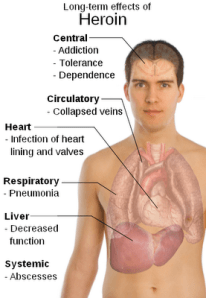
“heroin abuse is associated with serious health conditions, including fatal overdose, spontaneous abortion, and—particularly in users who inject the drug—infectious diseases, including HIV/AIDS and hepatitis. … Chronic use of heroin leads to physical dependence, a state in which the body has adapted to the presence of the drug. If a dependent user reduces or stops use of the drug abruptly, he or she may experience severe symptoms of withdrawal.”

Heroin obviously fulfills the high potential for abuse and lack of accepted safety need to fit into this category. And though it’s accepted in the UK, in the United States, there is no accepted medical use for heroin (InfoFacts: Heroin).

(Click for sources)
So, how is marijuana in a schedule with a drug like heroin? When the CSA was organizing this legislation, Congress wrote a letter to Roger Egeberg from the Department of Health Education asking the department’s opinion on where marijuana should be placed in the drug categories. Egeberg replied that marijuana should be put into schedule one until the studies they are conducting were finished. The studies mentioned finished in 1972 and recommended marijuana be removed from any scheduling and be decriminalized (Historical Timeline- History of Marijuana as Medicine – 2900 BC to Present). But, in 1971, Nixon stated even if the studies recommended he decriminalize marijuana, he still wouldn’t (Nixon). Nixon was very against marijuana. Another problem with being in schedule one is, as the legislation states, “[being in schedule one] limits authorized activities” (Controlled Substances Act TITLE 21 ). Therefore, because marijuana is in schedule one, it is harder to get permission to research. If marijuana was taken out of schedule one, it could be researched, which would be beneficial.

Marijuana absolutely doesn’t fit in the category. Schedule one drugs have a high potential for abuse. This is confusing because the main ingredient in marijuana, THC has been sold in a pill form called Marinol in America for more than 20 years. This drug is in schedule three (Chapkis). Marinol is more psychoactive than marijuana, which many believe, is the reason marijuana is labeled with a high potential for abuse. The problem with Marinol is it lacks some of the benefits that marijuana has. Also, Marinol is more expensive which is a big disadvantage to their biggest clients, cancer patients, since they have so many other medical bills to worry about (Armentano).

Schedule one drugs are likely to cause dependence. One cannabis user who has chronic pain due to his broken back explains this:

“I’m careful not to ever abuse my prescription drugs—in fact, that is part of the reason to use marijuana, to cut the need for those pain relievers that are very addictive. With the heavier strains of marijuana, I can take half [a prescription pill]. That’s all I’ll need.”

Marijuana not only doesn’t cause dependence, it helps users be less dependent on other prescribed medications (Chapkis).

Schedule one drugs have no accepted medical use in the United States. While I cannot argue there is an accepted medical use, I can argue there should be an accepted medical use. Studies show marijuana may help protect the brain in MS and Parkinson’s patients. Also, it may have anti-cancer properties to help fight brain and breast cancer. Marijuana produces a psychedelic effect that could only help patients suffering from extreme pain that is inevitable with a condition like cancer or MS. Though this may not make their pain go away, it does give them the strength to rise above it and get onto their days (Chapkis).

Marijuana’s medical disadvantages are greatly reduced when used with a vaporizer. Vaporizing eliminates the risks associated with smoking. Vaporizers boil the herb and produce a vapor that the user then breathes in (Marijuanavaporizer.com) The risks associated with smoking are not prevalent when inhaling vapors because the chemicals are heated to a temperature that produces the vapor but does not produce the harmful chemicals that are affiliated with smoking  (Armentano). Vaporizers are cheaper which again, is a huge benefit for patients that have medical bills to worry about as well   (Marijuanavaporizer.com).

Schedules 2-5 can be prescribed. Each schedule has different levels of potential for abuse. Schedule two drugs, for example morphine, have the highest potential that is still prescribed; while schedule five drugs, for example Lunesta, have the lowest (Controlled Substance Schedules).

Marijuana should be moved to a lesser schedule. I think it should be in schedule 3 with Marinol. Being in schedule three would open marijuana up for more research. It will help people forget the problems brought onto them by their ailments. Marijuana has a medical benefit and is not likely to cause dependence or abuse.

Drugs were decriminalized in Portugal. It was very beneficial to the country. 10 percent of Portuguese people over 15 have used marijuana in their lives. This is the lowest percent in Europe and staggeringly low compared to America’s 39 percent of people over twelve. Mark Kleiman, author of When Brute Force Fails: How to Have Less Crime and Less Punishment says,

“I think we can learn that we should stop being reflexively opposed when someone else [decriminalizes] and should take seriously the possibility that anti-user enforcement isn’t having much influence on our drug consumption” (Szalavitz).

Works Cited

Armentano, Paul. “Marinol Versus Natural Cannabis Pros, Cons, and Options for Patients.” 11 August 2005. NORML Working to Reform Marijuana Laws. 19 April 2012.
Chapkis, Wendy. “Cannabis, Conciousness, and Healing.” Contempory Justice Review December 2007: 443-460.
“Controlled Substance Schedules.” 1970. U.S. Department of Justice Drug Enforcement Administration Office of Diversion Control. 19 April 2012.
“Controlled Substances Act TITLE 21.” 11 June 2009. FDA US Food and Drug Administration. 12 April 2012
“Historical Timeline- History of Marijuana as Medicine – 2900 BC to Present.” 8 March 2012. Procon.org. 12 April 2012
“InfoFacts: Heroin.” March 2010. National Institute on Drug Abuse. 19 April 2012
Marijuanavaporizer.com 19 April 2012.

Szalavitz, Maia. “Drugs in Portugal: Did Decriminalization Work?” Time Science 26 April 2009.

The President’s News Conference. Perf. Richard Nixon. 1 May 1971.

Posted in x Research Position Paper | 3 Comments

Research Paper (not finished) -Aime Lonsdorf

We have all heard it: America is obese. We are obese, and it is all thanks to Surgeon General David Satcher claiming that America had the highest international body mass index (BMI) in 2001. It is widely accepted by medical professionals that a person’s obesity can be calculated through a their BMI, a nearly perfect ratio of a person’s height and weight (Surgeon General). But, this nearly perfect system is proving to be more imperfect than the latter; its perviously minor flaws: the system is gender and age specific in children under 15 and then uses the same criteria across the board for all men and women and beginning to not appear so minor. While these flaws were accepted for over a decade, there has been a spike in the number of medical professionals who are beginning to assert that the ratio should not be used when evaluating a person’s obesity due to the fact that it is not accurately reflective. The recent notion that medical scientists need to find a better, alternative method to the BMI ratio has lead many people to question weather or not Americans are in fact as over weight as the BMI system claims and weather or not their supposed obesity has lead many people to negatively look at fast food and other sugars. The Surgeon General and his team defined America’s obesity by the BMI system which measures the amount of fat, the flabby tissue that gives a person their out of shape appearance, a person has in comparison to their height and weight; “BMI is calculated as weight in pounds divided by the square of the height in inches, multiplied by 703. Alternatively, BMI can be calculated as weight in kilograms divided by the square of the height in meters (The Lancet).” Although the system is faulty in some areas, medical professionals deem it an accurate method of measurement primarily based upon the fact that there is no other system of obesity measurement that has been universally accepted. A BMI over 25 is considered to be overweight, signaling that a person has more fat than he or she is supposed to have. When the Surgeon General made his announcement in 2001, Americans were considered to be overweight with a cumulative BMI of approximately 41.5. But, the BMI system has various limitations that were not taken into account during the Surgeon General’s announcement. In adolescents, obesity is defined as age and gender specific or, as anyone ranking above the 95th percentile range in the CDC BMI-for-age-growth charts. These charts easily assess a child’s BMI by comparing their height and weight growth yearly. A child’s percentile ranking is relative to the ranking of other growing adolescents in the same age and gender grouping. These charts not only help assess growing children who are overweight, but also underweight. Each child is supposed to be measured with the charts by their doctors during their yearly physical. Research has proven that although the BMI measurements claim to measure body fat, it does not do so as directly as people think. For example, the system can overestimate the amount of fat in a person(s) who is muscular and underestimate the amount of a person(s) who have lost muscle mass, such as the elderly. It does not make any difference to the BMI system whether you are a 21 year-old olympic athlete or a 75 year-old, immobile man (BMI Not Accurate). Prime examples of the BMI system mistakenly classifying people are basketball star Kobe Bryant and actor Brad Pitt, none of whom appear to be overweight. Arnold Schwarzenegger, a world class body builder and actor, was categorized into the highest level of obesity (Devlin). With clearly faulty classifications such as these, how can we trust the system? The blatantly defective evidence that disproves the BMI system leads to the question of whether or not America really was the most obese nation in 2001 as previously stated by the Surgeon General and if it is still on the track towards chronic obesity. The system cannot distinguish the difference between fat and muscle. According to a 2004 study conducted by The American Journal of Clinical Nutrition, the addition of calculating a persons waist circumference (WC) to their BMI is a better predictor of obesity risk and the illnesses that come with being overweight than the BMI system alone; however the evidence is inconclusive due to the fact that there is not a significant amount of data supporting this theory outside of the American Journal of Clinical Nutrition’s own testing (Janssen, Ian). LiveStrong.com article Alternatives to BMI confirms this theory by stating that measuring the natural waist can give an almost accurate indication of the amount of abdominal fat a person contains. Women with WC of 35 inches or more and men with a WC of 40 inches or more are considered to be risk factors (Holley, Casey). Although these studies are not yet widely approved by national medical professionals, they are quickly on their way to being approved and providing a better method of calculating how obese a person is. Regardless of the actuality of the Surgeon General’s announcement in 2001, there has been an abrupt change in the American culture to make sure Americans do not remain the world’s fattest nation. Not only has the government gotten involved in helping maintain and lower obesity levels in Americans, but there has been a growth in the amount of private intervention being put out by privately owned companies and non-profit organizations. Although the common thought would be that Americans want to be skinny (since being thin is the clear opposite of being obese) the most commonly used point during the fight against obesity has been to do it in a healthy manor. One of the most important factors in fighting obesity is government intervention, or actions taken by the government in order to affect the decisions made by individuals on either economic or social matters. Due to the fact that people highly value their privacy and ability to make their own decisions, government intervention into the personal lives of the public is constantly being called into question: how far can the government go? The government has already intervened into the every day lives of Americans; they have done this so much and so well that people hardly notice it anymore. For example the federal government constantly intervenes in the lives of Americans by installing traffic lights, setting curfew laws, and creating school curriculums. But, when the Surgeon General made his announcement about obesity, the general public rejected the early attempts to regulate the nations obesity levels. Weight, is a personal issue and for a while, a great deal of people felt that it was too personal for government intervention. However, the public has overtime become accustomed and more aware of the obesity epidemic, primarily to both government and private intervention. A major issue with the government trying to reduce the and maintain the current levels of obesity in America is the fact that their intervention would have to surpass the economic states of some areas of the countries. People residing in lower income areas tend to maintain higher obesity levels due to the simple fact that eating healthy is expensive. In most low income places, a 12 pack of Cosmic Brownies is equivalent to the price of about two packages of grapes. So, naturally, to save money, people tend to eat more fattening foods.  In places such as this, there is also less money being given to school districts where there are less healthy alternatives for students to eat during lunch and snack time. The government, along with many private companies and non-profit organizations have been pushing for more natural grown foods in schools, such as fruits and vegetables, and healthier options to be provided for students, pretzels as opposed to cookies. Many companies have been donating money to get healthier options for students to eat and providing money for these options to become more accessible and affordable. Leading Medical Journal, The Lancet, states the government should be responsible for making healthy foods cheeper and affordable stating that they should be easily accessible at both private and public schools along with public universities. So, a possibility to increase health the over all health in the general public would be to produce cheeper produce and for the government to fund more home-grown produce, such as establishing new farms and giving money to already existing ones. If fresh produce is more affordable, there is a possibility that they will become more desirable and regularly consumed. An issue with this would be that this idea would be opposing foreign trade and would be slightly more costly. One of the toughest forms of intervention is trying to influence the private sphere of people. The private sphere is a space known only to the person who possesses it; it contains their thoughts, desires and knowledge. Republicans feel that there should be little to no government involvement into this realm while Democrats feel that there should be a great deal of intervention. But with an issue such as obesity, something needs to be done. Bureaucrats cannot sit down with every family during every meal to make sure good eating habits are being enforced and proper exercise routines are being followed.  One possible way of doing this, according Kersh and Monroe, is to create an even stronger sense of social disapproval. The idea is to alter the current social atmosphere and have fast food chains, and other fattening foods, be thought of as highly unacceptable and even detrimental to the overall health of a person. Supersize Me, a documentary study about McDonald’s and other fast corporations, has already given out a simple form of social disapproval: fast food makes you fat. Since the documentary was released, there has been a dramatic chance in the way the fast food industry was run. They are now required to provide a list of how many calories are in each of their options; many companies are now offering low calorie meals; and there is no longer the “supersize” option at most fast food establishments. There needs to be a greater emphasis on eating healthy as opposed to the alternative. But, according to Kersh and Monroe, furthering social disapprovals should conducted similarly to the way the government and other organizations made drugs and alcohol appear socially unacceptable: through the flow of information. So, they suggest that another positive form of influence to public behavior can be achieved through medical-science which means allowing people to know facts about being overweight and what it means to be physically fit. According to the two, the facts do not have to be entirely accurate; the idea is to convey the true message that being overweight is not good and will soon be socially unacceptable. Also, people should be able to get help outside of the gym, according to the authors, who want there to be group meetings similar to meetings set up for drug addicts. The demon user/ industry effect is to influence Americans to feel like people who eat poorly and industries that promote poor health habits are “demons,” or inherently bad. Surprisingly, it is easier than it seems to put a demonic spin on negative foods. In 2009, leading expert in childhood obesity Robert Lusting’s lecture, “Sugar: the Bitter Truth,” got over 800 thousand views on YouTube with a viewer growth rate rate of approximately 50 thousand views a month. The hour and a half long speech persuasively lists sugar as a toxin and a poison and often refers to it as evil. Toxic sugar is not only the common white household substance, scientifically known as sucrose, but also high-fructose corn syrup, which Lusting calls the “most demonizing addictive known to man (Taubes, Gary).” Not only does sugar provide consumers with empty calories, calories that provide no nutritional value, but can cause numerous health issues such as obesity, hypertension and diabetes. However, this is not to say that people should not be eating positive sugars: the sugars that come from fruits, vegetables and whole grains that provide antioxidants, energy and often enzymes that encourage a natural boost in metabolism, leading to weight loss. Foods that contain toxic sugars, such as anything processed, from a fast food restaurant, and many desserts should be avoided. Since Americans have acknowledged their growing obesity problem, there has been a rapid increase in the over all health of the American Public and a decline in the nations average BMI. According to a study conducted by one of the top medical journals, The Lancet, as a follow up to the study produced by the Surgeon General in 2001, when modern international BMIs are compared, America is not even in the top 10. America has lost its perviously held number one spot to the small nation of Nauru. Over the last decade or so, the push for government intervention and personal motivation to get fit, and healthy has paid off. While American men are rated 10th on the international BMI scale, American women are ranked 36th with a BMI of 28.7. This is proof that, obesity can be sustained and maintained at its current levels and even prevented for the future. The truth is, it is very hard to influence the public and personal sphere of America. But, if it is reached, it is possible that obesity can be maintained at its current levels and even possibly decreased and one day stopped. The biggest slam to any industry from the Surgeon General’s announcement came to the fast food industry because men and women were beginning to believe that eating at restaurants such as McDonald’s and Taco Bell were one of the key factors that played a role in American obesity. Contrary to this popular and often substantive belief, not all fast food restaurants are as detrimental to a person’s weight as previously believed. McDonald’s is a prime example of this. Ever since the movie Super Size Me was released in 2004, exposing the dangers of a “super sized (Super Size Me),” or extra large, meal, McDonald’s has moved away from its long, publicly given title of the most unhealthy fast food establishment. While the movie helped change a great deal about McDonald’s and numerous other fast food establishments, they did not do all the work that has ranked McDonald’s 8th out of the top ten healthiest fast food establishments, according to a consensus produced by Health Magazine (Health Mag.). Other fast food chains such as Wendy’s or Taco Bell do not even make the cut. The magazine sent out a team of researchers to survey 100 fast food places, and scored them on factors such as the use of healthy fats and sodium counts, the availability of nutritional facts (which was previously hard to find in fast food chains), and the use of organic and natural produce. The article states that the once thought of as unhealthy restaurant is paving the way for other fast food industries in the currently “heart- and waist-friendly (Health Mag.)” society. One of the establishment’s most popular new techniques that has been incorporated into other establishments is the option to have a side of fruit with every happy meal instead of french fries. And, if you have to have the fries, their french fries are baked in CDA approved heart-healthy canola oil. Also, the chain offers low calorie options such as snack wraps which consist of a mere 260 calories (Health Mag.). In 2009, leading expert in childhood obesity Robert Lusting stated in his lecture Sugar: the Bitter Truth, that sugar is “the most demonizing addictive known to man (Taubes, Gary),” labeling it the most toxic and poisonous food. Throughout his lecture, he attributed the incorporation of sucrose, commonly known as table sugar, and high fructose corn syrup,  into foods as the leading factor of obesity. Most of these sugars are incorporated into fast foods and other processed goods. Yet, it is not useful to place all the blame of weight gain onto one food. While Lusting suggests and enforces the idea of cutting out sugar entirely, the Dietitians Association of Australia does not recommend this at all. In their medical journal entry Sugar: not so toxic,  they state that when it comes to sugar, men and women should try to eat it in moderation and limit their intake of foods high in added sugar and low in nutritional value such as soda and candy (DAA). If you have not seen the commercials proclaiming the goodness of high fructose corn syrup, then you should. Aside from their comical attributes, they are not wrong. What was conventionally known to be bad for your body, and toxic, according to Lusting, is far from it. Promoted by the Corn Refiners Association (CRA), the attempts to get high fructose corn syrup out of the toxic range are surprisingly being supported by the American Medical Association which recently announced that corn syrup does not contribute to obesity (McLaughlin, Lisa). If the BMI system is clearly flawed and there are other better and more efficient methods of measuring the percentage of a person’s body fat, why are doctors still using it? If a person cannot accurately measure their actual fat percentage, how can we assume that America was at one time the world’s fattest nation? While it is clear that alternative methods to the BMI system are not yet medically accepted, it is also clear that to keep using the BMI system would not be beneficial towards the medical community in any means. The only absolute proof that has come from the realization that the BMI system is heavily flawed is the notion that America may in fact not be as obese as though of by the world’s populations. It is important that medical professionals continue to test alternative theories so that the public can be provided with a more reliable method of calculating a person’s body fat percentage.Although many aspects of American society are getting healthier: McDonald’s has become a considerably healthy establishment, the last fifteen years or so has seen a spike in the organic and natural foods industry and, in part due to First Lady Michelle Obama’s “get fit” programs, it has become increasingly more important for Americans to exercise and consume healthier foods- and yet, in 2011, obesity rates increased in 16 states and the rates did not decline in any state (F as in Fat). According to F as in Fat: How obesity threatens America’s future 2011, a report from Trusts for Americans Health (TFAH) and the Robert Wood Johnson Foundation (RWJF), 12 states  now have obesity rates above 30 percent; merely four years ago, only one state had a percent ranking that high. Shocked by these statistics the report examined exactly how obesity has grown over the  past two decades (F as in Fat). Twenty years ago, no state had an obesity rating of above 15 percent. This year, in contrast, 38 out of the 50 US states produced obesity ratings of over 25 percent. For the 7th year in a row, Mississippi has maintained its leading spot as the number one state with the highest level of adult obesity (F as in Fat). The report noted that the fastest growing obesity levels reside in the south: Alabama and Tennessee have experienced intensified rates; this year, the slowest growing levels occurred in Washington DC, Colorado and Connecticut. The highest obesity rates remain in racial and ethnic minority adults, along with low income families (F as in Fat). While American’s might be seemingly be increasingly getting fatter, many public health experts are claiming that it might be too soon to see an increase in American obesity levels due to the fact that the nations efforts to slim down have only begun in recent years (Rochman). The fact that obesity rates are not reclining has nothing to do with the fact that public health programs are not promoting healthier diets along with more physical activity. Or, that an individual’s personal goals and efforts to obtain their dream weight are not working. Dr. William Dietz, director of the division of nutrition for the CDC, claims that efforts to ward off obesity are in fact working fine. Comparing the anti obesity efforts to the 1950 anti-smoking efforts when medical professionals released the conclusive evidence about the link between smoking and caner, the doctor asserts that for approximately 15 years, smoking rates remained at a plateau and even increased for sometime (Rochman). It is the same concept with tackling the issue of obesity in America: it needs time and further developed tactics to achieve reduced levels. Ironically, these medical professionals are basing their evidence off of a faulty scale for evaluating a person’s body fat percentage. The BMI system, which is a ratio of height to weight uses criteria that is neither gender or age specific in men and women over the age of 15. The system also fails at identifying the difference between a person’s muscle mass with their actual body fat; since muscle weighs more than fat, a physically fit and healthy human would appear obese. Based on the fact that the nation’s current obesity levels were raked based on a system that is not accurate, it is impossible to accurately identify weather or not Americans are actually getting fatter or fitter.

Posted in x Research Position Paper | 2 Comments

Research Position Paper(not final draft) – Bill Brooks

Research Position Paper

First passed in 1996, the Dickey-Wicker Amendment prohibited any federal funding to research which destroyed human embryos.  The Dickey-Wicker Amendment, as well as the Sherley v. Sebelious case which supported it, seems to be well hidden by a veil of ambiguity and legal jargon which stems from the moral dilemma facing the use of human embryos in research.  President Obama’s proposal, which would move to overturn this amendment, thus allowing for the utilization of human embryos to conduct stem cell research was met with heavy criticism and viewed skeptically under the pretense that viable stem cell research can be conducted without the use of embryos. 

Stem cells derived from human embryos are not only more easily accessible but also yield a higher potential for research capabilities.  Embryonic stem cell research is currently the most reliable means in the field of regenerative medicine including many types of cancers, neurological diseases, spinal injuries as well as even regeneration of lost limbs.  Many of the lawmakers have only noted the seeming gruesome nature of the field while overlooking the obvious benefits.  Stem cells have been proven to have the ability to rejuvenate damaged tissue as well as create entirely new tissues.  It is widely believed that these methods are also superior to conventional methods because they carry a far less mild “risk-benefit profile”.

Often the terms used to describe the process of embryonic stem cell research are confused with one another.  This confusing terminology can be easily exploited by anti-abortion politicians and similar political groups in order to win favor with the public.  It is necessary to distinguish the difference between a stem cell and an embryonic stem cell.  The addition of a single word has some serious implications.  Embryonic stem cells, as one might guess, are derived from a human embryo.  However there is also some confusion surrounding the precise definition of “embryo” compared to a fertilized cell, also known as a zygote.  A zygote is the single cell that forms the instant of fertilization commonly called conception.  An embryo is formed from the process of cell division as the fertilized egg (zygote) matures.  This is where the cells used in embryonic stem cell research are derived.  In humans, the zygote forms an embryo thirteen days after fertilization (Campbell 1034).  In short, an embryo is a multi-celled zygote.  A third stage of development is of course the fetus which is the term used to call the maturing embryo after about ten weeks, this is the stage where human like features develop.  As we can see a fertilized egg and an embryo are not the same, they are very similar but, in the thirteen days of maturation the zygote undergoes subtle changes that make the embryo so valuable in the field of regenerative medicine.

Now that the scientific definition of an embryo has been established, it is possible to examine the scientific differences between stem cells from an embryo and those harvested from other sources.   There are many methods by which stem cells can be obtained including those derived from adult cells, prenatal cells (umbilical cord), and bioengineered cells (produced in a lab).  The derivation of adult cells is accomplished through the removal of bone marrow or adipose (fat) tissues.  Prenatal cells are taken from the umbilical cord blood cells or amniotic fluid.  Bioengineered stem cells are created in a lab from somatic cells (almost all body cells) which undergo complex and arduous scientific techniques in the form of either cloning, or induced pluripotency.  Cellular potency is the term used to describe the ability of a stem cell to differentiate into its surrounding cells.  All of these methods require some form of alteration or procedure to yield usable stem cells, in the case of using adult cells it is often a very long and painful outpatient procedure. Embryonic stem (ES) cells differ in nature from all other cells by two crucial characteristics being their pluripotency and their ability to replicate indefinitely. (Zacharias 635)   These two characteristics are what make ES cells the most beneficial option for preventing and reversing tissue loss among patients afflicted with degenerative illnesses.

In contrast to these other methods, embryonic stem cells are taken from the inner core of the embryo itself which requires little to no processing to obtain.  Secondly, the stem cells taken from a human embryo are more pluripotent than other stem cells.  This means that they are able to differentiate into different tissues faster and with greater accuracy.  Lastly, and most importantly, embryonic stem cells have the capability to differentiate into all tissues in the human body with no replication limit, no other type of stem cell has this unique ability.  Adult stem cells are only able to differentiate into a certain number of tissues depending on their origin and lab induced pluripotent cells still lack the pluripotency of embryonic stem cells.  (Zacharias, David G. et al. pg 637-638)

The pluripotent nature of these cells translates into the ability of stem cells derived from embryos to differentiate into any of the more than 220 types of cells in the human body.  And because these cells are able to replicate indefinitely, their potential to cure diseases is truly limitless.  Based on previous research trials by Geron Corporation, a California-based biotech company, researchers have found that embryonic stem cells are able to repair myelin sheaths (of the spinal cord) and will most likely be able to restore some of a patients mobility. (Reinberg)  In other words a paralyzed individual stands to regain some of his/her mobility back after undergoing embryonic stem cell therapy.

When compared to the other methods of stem cell therapy, the differences are enormous.  For example, cells taken from bone marrow are only able to differentiate into other bone or cartilage cells.  This means that they are utterly useless when trying to give a patient back his bowel function or mobility after a paralyzing automobile accident.  These fixes can only be accomplished with the utilization of ES cells, and would lead to sensational gains in quality of life, as is apparent.

To put this into more understandable terms it is easiest to look at real world examples.  Adult stem cells taken from either bone marrow or adipose tissue are only capable of differentiating into either bone/cartilage cells or adipose tissue respectively.  Prenatal stem cells are often useful in several applications but again lack the range that embryonic cells offer.  Finally bioengineered cells can offer an alternative to embryonic stem cells, albeit an inferior alternative.  The field of induced pluripotent stem (iPS) cells is far more complex than that of embryonic stem (ES) cells, which leads to a loss of efficiency in the final product cell as well as a decreased functionality as compared to ES cells.  It is most useful to use stem cells derived from an embryo because they are able to create any type of tissue found in the human body.

It is important to remember that the source of the stem cell affects its properties throughout the entire life of the cell.  It is also important to remember that when this type of regenerative medicine is involved, often a human life is at stake.  In other words, using an inferior type of stem cell can lead to death.  Embryos are unique in that they contain the basis for each type of tissue in the human body, due to the fact that if they had been allowed to mature they would in fact eventually become a full human body.  The importance of embryonic stem cell research as compared to other stem cell research is exemplified in a quote from a Mayo Clinic Proceedings article: “iPS researcher Juan Carlos Izpisúa Belmonte, ‘ES cells are needed to understand the basic mechanism of pluripotency and self-renewal. As such, it is out of the question to even suggest phasing them out. We will be lost without them.’” (Zacharias, David G. et al. pg 637)

The two main opponents of embryonic stem (ES) cell research that favor the current ban are political and moral in nature.  The political view of the situation states that there should not be research conducted if it results in human tissues being destroyed.  And the moral dilemma is that the embryo utilized is/could have been a human itself.  These two opinions stem from the same basic principle which is that a human embryo can be viewed, in very specific circumstances, as a human or part of a human.  These two views are very closely linked by this opinion, and therefore can be dealt with simultaneously in most cases.

The overwhelming issue that embryonic stem cells face morally and politically is that of defining exactly when a cluster of cells is called a human being.  This issue is similar to that of the abortion issue which was highly debated just a few years ago.  For example in almost all cases it is legal in the United States for a pregnant woman to receive a late term abortion, that is to terminate her pregnancy up to the 24th week of pregnancy, sometimes even longer.  At this state of gestation limbs, eyes and organs are almost fully developed yet it is not deemed a human being and can be terminated (Campbell 1015).  But the government has decided to ban any research which destroys an embryo only 13 days from fertilization.   Morally defining an embryo is crucial because of the laws which initiated the ban.  With almost no development, save for the production of a few membranes, an embryo should not be considered a human or living in any way.

Laws and regulations currently stand in this country that procedures involving ES cells are not allowed.  A country founded by innovators that has been known to provide the best in so many other fields, such as NASA’s space program, superior defense programs and technology is quickly falling behind when it comes to saving and improving the lives of its citizens.  Because religious principles have stood in the way, this nightmare has become a blinding reality in the faces of those who understand its true potential.  United States programs have remained the best because of continued funding, for example in 2011 the Department of Defense was given $548.9 billion in funding, NASA alone received $6 billion all while the funding for embryonic stem cell research has remained steady at $0. (US budget 2011)  Without the necessary funding the potency of embryonic stem cells will never be realized.

The cause of the current policies concerning ES cell research dates back to 1996 when the Dickey-Wicker Amendment was passed stating that no federal funding should be given to research in which any part of a human embryo was destroyed.  After wading through the current state of muddlement concerning issues like this, it becomes clear that this amendment itself stemmed from the fact that most people holding political offices are of the opinion that a human embryo should be regarded as a living human being and therefore has rights protecting it.  Being that the point of this essay is to establish a cause and effect rather than to establish why this point of view is incorrect, delving too deeply into the contradictory nature of this opinion is unnecessary.  However, it is important to note that there is an obvious inconsistency among these same politicians when it comes to defining a life, such is the case in the current abortion laws.

The cause of these preventative laws has its basis in Christian ideals that have invaded political agendas and have swayed the decision making process.  While ideals that are held by over three quarters of the United States population should not be disregarded all together, but rather should be used at discretion and weighed against what stands to be lost.  In the case of ES cell laws, what stands to be lost is huge gains in quality of living, independence as well as lives themselves.

As stated before much of the aversion to the use of ES cells in regenerative medicine has been derived from the Dwickey-Wicker amendment in 1996 which prohibited the funding for research that destroyed any human tissue.  While the concern for causing or incentivizing the destruction of a potential human life is obvious, the basis of this amendment is flawed.  At first glance this amendment may seem irrefutable, but upon closer inspection the fallacy of the document is more easily perceptible.  The fallacy lies within the notion that a nearly single celled tissue is human solely because of the fact that it was human derived.  Other pseudo-moral laws that strive to define a human life differ in what is human and what is not.

While separation of church and state has been pushed for almost since the inhabitation of the United States, being first cited in Thomas Jefferson’s 1802 letter to the Dansbury Baptist Association, (UNECESSARY?) there seems to still be a mixing of Christian ideals within the current laws.  While the Conference of Catholic Bishops has been open with their opinion that the destruction of any human embryo is grossly immoral , either by research or by abortion, the vast majority of states in America have late term abortion laws which allow second and even third trimester abortions.  The discrepancy is immediately apparent in these two views.  Now, certainly most would agree that a discrepancy between political and religious parties is acceptable.  However, nearly all of the arguments for the current abortion laws were derived from a moral standpoint which is what makes this discrepancy interesting.  The famous Roe v Wade Supreme Court case ruled that in order to be a human then the infant (for lack of a better term) must be “viable” or able to live outside of the mother’s womb without life support.  This is certainly far different that the definition of life when it comes to embryonic stem cell research.

These discrepancies themselves do not point to a completely flawed system, but when abortion laws viewed in tandem with the current laws concerning research conducted with human embryos there is an undeniable misstep in logic.  It seems that crucial terminology like defining what a life is should be the same across the board.  Although it is true that certain words can take on different meanings when viewed under different light, as is the main argument for such laws as medicinal narcotics, illegal in some settings and legal and necessary in others, something as critical as defining human life should not change regardless of the scenario.  The question that begs to be asked is why aborting an embryo is legal but using it in a lab to save lives is not.  Both scenarios, at the same stage of development are viewed entirely differently.  It is the opinion of many scientists, who know the true power of these types of cells, that they should be viewed as one in the same.

Another major concern of the opponents of this field of research is that using embryos for research may lead to incentivizing abortion for the purpose of research.  It has been proposed that the donation of usable tissues would merit a payment of some source, which may lead to an increase in abortions for the exclusive purpose of a payment especially in poverty-stricken areas of the country.  This, while a valid claim, has an all too simple solution being: do not offer payment.  If a woman has already chosen to have an abortion and the donation of tissue could be used for research then a reduction or free-of-charge termination could be performed, which would give no incentive to have abortions for financial gain.

The intervention of religious and political organizations has led to a huge set back in the fields of regenerative and therapeutic medicine.  Because current United States lawmakers have deemed the application of embryonic stem cells in medicine to be immoral, the field of regenerative medicine has suffered a setback of over two decades.  Stem cell research and the use of stem cells in patients with degenerative diseases is nothing short of a miracle, however by banning funding for this particular type of stem cell research a short ceiling for potential healing is established

Many anti-abortion and religious groups also view the usage of previously aborted and cryogenically frozen embryos for research as wrong.  Often times it is due to the fact that they view these practices themselves wrong and do not want these tissues used for any other purpose, even though they will likely be destroyed anyways.  This view is flawed because knowing that these tissues hold the potential to save lives or greatly increase the quality of life of a person afflicted with an illness it seems morally wrong to allow to be destroyed without any benefit.  It stands to reason that if the tissues are going to be destroyed regardless, it is almost immortal to let them go to waste, they might as well be used to help someone in need.

It is important to remember that this type of research deals with the utilization of human tissue often not much bigger than the period at the end of this sentence.  To classify this conglomeration of cells as human is to say that soil should be considered a tree because it may one day give rise to one.  There is no argument that it must be a daunting task to define when a fertilize egg becomes a human but it seems that in some instances it is apparent that it is not one.  Just as there is no doubt when stating that a toddler is a human, there should be no doubt that an embryo of just a few cells is not a human.  With a redefining of an embryo, the government could lift its ban on embryonic stem cell research and open the gates to discovering cures for deadly diseases.

Posted in x Research Position Paper | 3 Comments

Research Position Paper – Joe Mleczko

Timing is Everything

Isaac Newton’s third law of motion states, “For every action there is an equal and opposite reaction.” While this is a law of motion, it applies to almost everything else as well. The Civil Rights movement during the late 1950′s demanded action from the government. Those participating in the movement made it clear that if the government did not intervene on the injustices minorities were faced with, they would take matters into their own hands. The United States required a fast acting, strong program to help with this matter. The result was Executive Order 10925 which promised “affirmative action” would take place to ensure equality in places of employment and higher education.

In March of 1961, President of the United States, John F. Kennedy signed the Affirmative Action Act. As an attempt to the eliminate discrimination in the work place and in places of higher education, the policies that defined affirmative action (and still do) established guidelines for the recruiting process. These guidelines require that decisions on acceptance not be made with regard to race, religion, or gender. For the time that affirmative action was created, it provided the necessary balance that minorities needed to establish themselves as equals among a predominantly white nation.

The point in history that affirmative action was signed into existence, which came as a result of the racial tension of the late fifties, helped spawn a revolution. The Civil Rights Movement was on the rise, but as soon as the government stepped in, it exploded. Without recognition from the government, the United States could have continued to be a nation of bigotry and racism for much longer.

An essential component of affirmative action is the quota system that was been implemented by institutions to ensure their cooperation with the government policies. This system holds that in a place of employment or higher learning, all races be “proportionally” represented. This does not necessarily mean that the number of caucasians must match that of black and hispanic; however, it means there must be adequate numbers of each depending on the population of each minority group in the country. To the creators of affirmative action, if admissions and hiring was altered so that race, gender or religion did not determine acceptance, they had successfully given everyone an equal opportunity for a position(s).

So many years of affirmative action saw the increase in minority acceptance nation-wide. The government mandate to look closer at race in order to achieve greater diversity, caused establishments to become cognizant of every person’s race that applied for a position. Unfortunately, even though the United States is a far more progressive nation than it was in the 50′s and 60′s, the affirmative action policies remain in most states.

People who understand the law Isaac Newton produced, in a social situation (or any situation for that matter), will many times attempt to act on a prediction of the possible outcome. Unfortunately, society can be unpredictable, and that was the phenomena witnessed here in the United States. The action taken was affirmative action. It was required to be strong to combat the intensity of the national racial tension. However, the policies were “too affirmative,” and the reaction now has swung in the opposite direction in which now the majority is being discriminated against. The policy makers “over shot” their mark. A simple comparison to this failure can be made with a boat sailed by a captain. It does not take a lot to put a boat in motion. Instead, it takes careful planning to stop the boat at the proposed destination. If the necessary planning, or “throttling back” is not implemented, the destination will be missed and the captain must move in reverse.

For affirmative action, the captain of course is the government, the distance to be traveled is the time societal corrections will take, and the destination is eventual UNFORCED equality and diversity. The government never took the essential steps in throttling back to arrive at the final destination. Instead, the destination was passed, and as a result the country is experiencing a phenomena known as reverse discrimination. Now the nation must reverse the propellers to get back to the plan.

An obvious question to be asked is “whether the affirmative action policy makers intended to ever throttle back on affirmative action?” The obvious answer is yes, because they knew how extreme the policies were, which is made clear by the title, AFFIRMATIVE action. Extreme measures always result in extreme consequences. The next question is then, “If the government planned to throttle back, than why have they not?” Again, this answer is simple. The process has begun, though way passed the optimal time. Since so many people grew to rely on affirmative action, attempting to change it has encountered great resistance. While the original destination has now come and gone, more people are realizing a mistake was made, and it must be corrected.

Initially the policies of affirmative action sought to eliminate discrimination, but instead has created discrimination of a different group of people. It is now common to hear the term “reverse discrimination,” which is exactly what it sounds like. Before affirmative action, for example, an employer could very easily reject an applicant for simply being black. Now that employers are required to hire specific numbers of minorities, but there is still a majority looking for the same position, it is possible to see a white person eliminated from the hiring process for not being a minority. Arguing the fairness of reverse discrimination over the fairness of regular discrimination is the tricky part. Which is more unfair?

Perhaps the correct question to be asked is whether affirmative action actually does more good than harm?

Not only has the view of affirmative action changed greatly over the last fifty years, but the United States of America as a whole has changed dramatically. There was well defined need for affirmative action at its time of birth, being at the center of the civil rights movement. Since then, we have seen racism decrease significantly, and it is arguable that without five full decades of affirmative action, the United States could have already been a truly “color blind” nation. Making applicants specify race brings skin color to the surface, where in the absence of affirmative action, it could have been irrelevant. Those that believe the nation would go back to its old ways without affirmative action are ignorant to the changes the country has seen.

According to Kansas State University professor, Krishna Tummala, affirmative action has effectively brought minorities into the mainstream seeing as they are, socially, far more accepted. Since affirmative action countered decisions based on race, and now race is obsolete in society (partially with the help of affirmative action), it stands to reason that affirmative action is no longer needed (Potucek).

Instead, the nation watches as the underrepresented majority misses out on job opportunities and admittance to universities. In an article by Amara Phillip, two such examples are outlined. In 2003 the University of Michigan was sued by multiple white students claiming they were unconstitutionally denied due to being white. In the one case, a well qualified white female sued the law school after being denied solely because there was not enough room for more white females. The Supreme Court upheld that admitting students with regards to grades, test scores, recommendations, and race was well within the legality of affirmative action. Thus, the plaintiff lost her case. In the second case, two white applicants were denied and as a result sued the school for the unconstitutionality of the point system used by the University of Michigan for admittance. This point system assigned a certain number of points to each part of the student’s application, where minority status earned more points than that of majority status. After the application had been fully assessed, students with sufficient points were admitted, and those that did not meet the mark were rejected (Phillip). Fortunately, the Supreme Court ruled that this point system was unconstitutional; however, there is not much difference between the first case and the second.

The minority status is more “point worthy” than majority status because the university is required to fill seats with minorities even if it means denying better-qualified individuals.

Another example of reverse discrimination of those in the majority is outlined in a study done by two Princeton sociologists. The study they preformed revealed a very interesting fact about how elite schools weigh SAT scores for applicants. African Americans who scored above a 1500 (1600-point scale) were awarded an equivalent of 230 SAT points and hispanics were awarded an additional 185 SAT points. The study concluded that this was an attempt to “level the playing field,” but in reality, if a test represents academic ability, receiving extra points makes that person under-qualified for the final number they receive (Espenshade and Chung).

Recruiters use a variety of techniques to favor less-qualified minority students over better-qualified Caucasians, all to satisfy different affirmative action goals. Either admissions hopes to satisfy the government mandates, or they hope to achieve diversity. The reverse discriminatory factor here is simple. Caucasians are less “enticing” because they simply are not a minority.

Reverse discrimination now causes other problems in society, and whether or not hatred is directed at the correct people is irrelevant. According to Ernest van den Haag, racism can actually result from decisions based on affirmative action. If a well qualified person is denied a position so the recruiter can fill a quota with a minority, that rejected person may develop animosity towards the minority, which can lead to hatred (van den Haag). Sadly, the energy fueling that animosity could be used to attempt to change the affirmative action policies, but that is much easier said than done.

Another example of misdirected animosity comes from an article written by authors David Sacks and Peter Thiel, where admissions officers at Stanford have been unfairly labeled as racist for denying caucasians (Sacks and Thiel). These unidentified admissions officers, perhaps black men, perhaps white women, were unfairly accused of racism against caucasians for correctly following mandated affirmative action policies. Not only is rejection because of being caucasian unfair, but so is unjustly labeling someone as a racist for simply following regulations imposed by the government.

Allowing underprivileged people to reach just as high as those that are fortunate, is something that all governments should always promote. Unfortunately, the United States only considers minorities as the underprivileged in regards to affirmative action.

Clearly, the country must make some changes. Maintaining diversity is also an important goal of the United States’, so the solution cannot be too extreme in the opposite direction. The obvious proposal against affirmative action is to either change the people able to receive aid, or abolish it altogether. Less extreme methods include a better evaluation of individuals, rather than skin color.

In California, where affirmative action in public school admissions has been prohibited, they have found a different way to maintain diversity without such intense policies. New York Times writer Richard Pérez-Peña reports that California state colleges have implemented what they call a “holistic review.” With this system, rather than lump all members from one race together, they take a serious look at background and challenges the person has overcome (Pérez-Peña). This way minorities coming from “good” backgrounds are not given anymore assistance than those in the majority with similar backgrounds, and anyone that comes from a rough upbringing will receive aid regardless of race.

Immediately after the change in affirmative action policies, the state saw a decrease in minority admissions. However, this was countered by the implementation of the holistic review, which saw an increase in minority admissions without explicitly looking at race. This proves that admission offices elect to promote diversity, even without affirmative action.

The United States government clearly supports this advancement. According to an article by The Associated Press, found in the New York Times, a federal appeals court upheld this decision of banning affirmative action in California state public schools, after many tried having the ruling reversed (“California”).

This fact is offered to anyone like Dr. Bridget Terry Long and Adam Liptak who believe the country will backslide into a world of bigotry and racism without affirmative action.

Dr. Bridget Terry Long made it clear she does not believe in any affirmative action alternatives when she wrote, “the alternatives to affirmative action are unable to adequately address the impediments of college access for students of color…” (Long). This is truly a result of ignorance to what is realistically happening in California along with a few other states in which affirmative action has been abolished.

In a New York Times article, author Adam Liptak superficially dissects the topic of eliminating affirmative action from places of higher education. He said, “The consequences of such a decision would be striking. It would, all sides agree, reduce the number of African-American and Latino students at nearly every selective college and graduate school, with more Asian-American and white students gaining entrance instead” (Liptak).

The problem here begins with the assertion that “all sides agree,” but in the interest of brevity it can be overlooked. The other part of the problem is line claiming Asian-American and white students would gain entrance more so than current numbers show (to be clear, Asian-Americans are considered to be minorities, so they benefit from affirmative action…). This is insulting on a couple levels and can be interpreted multiple ways. One interpretation is that Liptak believes the abolition of affirmative action would allow for racist admission officers to “go back” to denying minorities due to some racial animosity. The other possible interpretation is extremely insulting towards minorities. Liptak is essentially saying that certain racial groups lack the ability to gain acceptance to elite schools. It can be agreed that intellects of present day come from every background possible. Therefore, with diversity in mind, but more importantly ability, anyone with the proper credentials will have the opportunity to earn acceptance, without the policies of affirmative action.

After fifty years of the indoctrination of affirmative action, it is easy to understand why so many people are hesitant to repeal the policies meant to do such good. With that being said, risks must be taken, and with the states that have already abolished affirmative action as a model, the nation will succeed.

A big problem on the front lines of this movement is The American Association for Affirmative Action, or the AAAA, which is an association focused on opposing any federal or state action that attempts to remove affirmative action policies (AAAA). According to their website, “The purpose of affirmative action is to give our nation a way to finally address the systemic exclusion of individuals of talent on the basis of their gender, or race from opportunities to develop, perform, achieve and contribute.” Other than the fact that saying in 2012 affirmative action is finally addressing something that the policies addressed in the 1960′s sounds silly, this organization is essentially saying that without affirmative action significant discrimination would be revived. This claim is based on no evidence whatsoever. In fact evidence supports that diversity would remain even without affirmative action.

Another Kansas State University professor, John Fliter, believes affirmative action promotes diverse student bodies and work forces (Potucek). While this claim is true, it does not mean affirmative action is necessary to promote diversity. The United States is made up of so many different people; while at first acceptance of others had to be forced, the nation has since evolved into a much more uniform people that would not function without acceptance of others. Even if this evolution can be attributed to affirmative action, that does not justify keeping its policies around.

Timing is everything and for its time, affirmative action did a great job producing diversity in an era run by the majority. Now, less extreme measures can maintain diversity, like those implemented in California state schools. These less extreme measures ensure that underprivileged individuals are assisted as necessary, but those in the majority truly deserving of acceptance also are not discriminated against.

Another possible alternative that can be used to correct the “over action” of affirmative action is the model used by the French. Danielle Ledford writes how instead of being based on race, France uses economic class to determine who needs assistance (Ledford). An argument against this in the United States is that many minorities are found to be impoverished, so there is no point in implementing a program like this, because they are covered by the current program. But what about impoverished caucasians? What kind of assistance do they receive? The answer is that they are denied the same assistance members of the minority receive. Therefore, using the economic based system would benefit impoverished minorities and caucasians, ultimately avoiding the concept of reverse discrimination altogether.

To summarize, the birth of the Civil Rights Movement caused affirmative action to be created. However, as a result of not “throttling back” on affirmative action, the policies have traveled too far and now cause reverse discrimination. As more citizens in the country recognize it is now time to move in reverse, the policies of affirmative action will continue to be replaced with less extreme, yet diversity promoting ones. To allay negative feelings of those that disapprove, this process must be watched closely.

It is certainly upsetting to see a program with such great intentions cause so much controversy. Unfairness is seen everywhere, from those qualified in the majority missing out on opportunities, to the legitimate minority accomplishments that are not taken seriously. Ultimately, a different approach to “leveling the playing field” should be considered. With the greater good of the American people in mind, the brilliant minds that govern this country should provide a better solution for the underprivileged. Using the holistic review process found in California state schools, or even a transition to an economic system (like that of France), a revised solution would work.

Works Cited

About the AAAA.“ About the American Association for Affirmative Action. Web. 30 Mar. 2012.

California: Affirmative Action Ban Upheld.” The appeal of the ruling to ban affirmative action from public schools is denied. The Associated Press. The New York Times, 3 Apr. 2012. Web. 5 Apr. 2012.

Espenshade, Thomas J., and Chang Y. Chung. “The Opportunity Cost of Admission Preferences at Elite Universities*.” Social Science Quarterly 86.2 (2005): 293-305. Print.

Ledford, Danielle. “Is Race Neutrality A Fallacy? A Comparison Of The U.S. And French Models Of Affirmative Action In Higher Education.Texas International Law Journal 46.2 (2011): 355-378. Academic Search Premier. Web. 11 Apr. 2012.

Liptak, Adam. “Justices Take Up Race as a Factor in College Entry.” Editorial. The New York Times. The New York Times, 21 Feb. 2012. Web. 30 Mar. 2012.

Long, Bridget Terry. “Diversity By Any Other Name: Are There Viable Alternatives To Affirmative Action In Higher Education?.“ Western Journal Of Black Studies 27.1 (2003): 30-34. Academic Search Premier. Web. 11 Apr. 2012.

Perez-Pena, Richard. “To Enroll More Minority Students, Colleges Work Around the Courts.“ Nytime.com. The New York Times, 1 Apr. 2012. Web. 2 Apr. 2012.

PHILLIP, AMARA. “The Diversity Imperative.“ Diverse: Issues In Higher Education 28.18 (2011): 16-17. Academic Search Premier. Web. 5 Mar. 2012.

Potucek, Rachel. “Affirmative Action: Pros and Cons.“ Kansas State University. Kansas State University, Fall 2003. Web. 30 Mar. 2012.

Sacks, David, and Peter Thiel. “The Case Against Affirmative Action.“ The Case Against Affirmative Action. Web. 06 Mar. 2012.

van den Haag, Ernest. “Affirmative Action And Campus Racism.” Academic Questions 2.3 (1989): 66. Academic Search Premier. Web. 5 Mar. 2012.

Posted in x Research Position Paper | 1 Comment

Annotated Bibliography: Eddie Jahn

1. Moneyball : The Art of Winning an Unfair Game by Michael Lewis.

Background: This is the story of the Oakland Athletics team and it’s manager Billy Beane, and they had collected a team of players that had specific stats they excelled in such as stolen bases and on base percentage and they had a 41 million dollar salary cap as apposed to a team like the New York Yankees who had a 125 million dollar  salary.

How I will use it:  It will be used by giving an example of a team that completed what I am trying to prove in my research article this will be a main source of mine.

2. Playoffs and Payroll Rankings

Background: This is an article talking about how teams that make the playoffs is not necessarily about your salary cap, teams with very high salary caps make the playoffs and a lot of times do not as well. The same goes for teams with the lowest salary caps this article gives examples of situations where teams all types of salary cap teams have either made or missed the playoffs.

How I will use it: I will use this by examples of teams that have made it to the playoffs with low salary caps and teams that have missed the playoffs with high salary caps.

3. New York Yankees vs. Florida Marlins

Background: In 2003 the New York Yankees and Florida Marlins played for the World Series, the Florida Marlins won it (4-2). This was an example of a team with the highest pay roll losing to a team with solid all around players with specific skills. Josh Becket, a Florida Marlins pitcher had 19 strikeouts through out the World Series. That is just one player on the team.

How I will use it: As an example of statistics that can be over looked and really be needed to win a championship like the Florida Marlins did.

4. Jose Bautista Stats.

Background: This website shows Jose Bautista, who is an outfielder for the Toronto Blue Jays and the website has all the statistics for his career.

How I will use it: To give examples of someone who has proved sabermetrics wrong, because there are computers that have generated statistics for players for years like predicting statistics, and he defied those predictions.

5.  The Hardest: Getting Bat to Meet Ball.

Background: This article is talking about how hard it is for baseball players to make contact with the ball after it is pitched.

How I will use it: I am going to use a direct quote from outfielder Torii Hunter, and I will use that to defend my argument that baseball is an extremely hard sport and that it takes a lot of talent, skill, and experience.

6. Anaheim Angels vs. San Francisco Giants

Background: This source is a box score of every game of the 2002 World Series between the Anaheim Angels and San Francisco Giants. It has links to every game also to tell all the statistics for each and every game of the World Series.

How I will use it: I did use this source already in the definition essay by showing the statistic that I called the “winning” statistic which was the RE24. This source is good because it gave me statistics about every player on both teams for the World Series and I used this source a lot in my definition essay.

7. Chicago White Sox vs. Houston Astros

Background: This source is the box score for the 2005 World Series between the Chicago White Sox and Houston Astros. It also links into every game to tell statistics for every game.

How I will use it: I planned on using this source in my definition essay also, but I did not get a chance to because my paper was already at the 1000 word mark before I even went into talking about this World Series it is another good example of the RE24 statistic and how that statistic is important in a teams chance of winning.

8. Sabermetrics in a University Classroom

Background: There is a one credit class at Seton Hall University taught on sabermetrics, it appeals to baseball fans and is taught about the statistics of baseball. There is actually formulas to calculate wins, runs, and runs created and it is said in the class that if Babe Ruth is not the greatest player wrong by your analysis you are wrong.

How I will use it: I will use this source by talking about sabermetrics and how it is a big thing in baseball now, and how scouts are using it and how fans find it interesting and are even going to study it in college.

9. Data Analysis and Baseball

Background: This source is about sabermetrics and how it is used in baseball such as calculating win intercepts. This is a good source because it has figures that show you what teams are leading in what statistics.

How I will use it: I will use this source to also talk about sabermetrics more give another example of how people use it and interests them, also how it is an important part of the game.

10. MLB Website

Background: This is the official Major League Baseball website it has all statistics of every player in the major leagues now.

How I will use it: To talk about the best players in the game and their statistics and how they compare to players that I have used in my definition essay already.

11. Struck Out by Béisbol

Background: This article is about scouting players in different countries specifically the Dominican Republic, there have been tremendous MLB players that have come from different countries such as the Dominican Republic. Of the 833 major league players 86 of them have come from the Dominican Republic that is the most from a different country next on the list is Venezuela with 58.

How I will use it: I will use this source to give an example of where players are coming from and how there are amazing baseball players getting drafted from all over the world based on their skill. Scouts are taking players from all places no matter if they know English or not teams want the best players and the players that will give them the best opportunity to win a championship.

12. Get to Know: RE24

Background: This article is about the statistic RE24. It gives the definition for RE24.

How I will use it: I will use this statistic to better describe the definition of the statistic RE24.

13. The Baseball Cube

Background: This website is a baseball statistics website showing statistics for every player in the major leagues for every year, including college teams and also minor league baseball teams.

How I will use it: I will use this website to support my paper using statistics for players and even tracking some players back to before their major league careers and looking at their statistics in either college or in the minor leagues and then compare that to their major league numbers.

14. Statistics Glossary

Background: This page is filled with baseball terms and their definitions.

How I will use it: I will use this page by when I use baseball terms I will define them in case people do not understand what they mean I will use the definitions to help the audience learn what I am talking about.

15. Sabermetrics Glossary

Background: This page is defining and describing terms of sabermetrics and they are aspects of sabermetrics that scouts look for in prospects.

How I will use it: I will use this page by giving examples of some of these terms in my paper to back up that scouts look for a lot of things when looking at prospects, and there are many things that go into drafting a player, and making sure that he is a player to fit their system.

Posted in x Annotated Bibliography | 1 Comment